Spectra Precision LL300N Laser 2024 Analysis: Worth It?
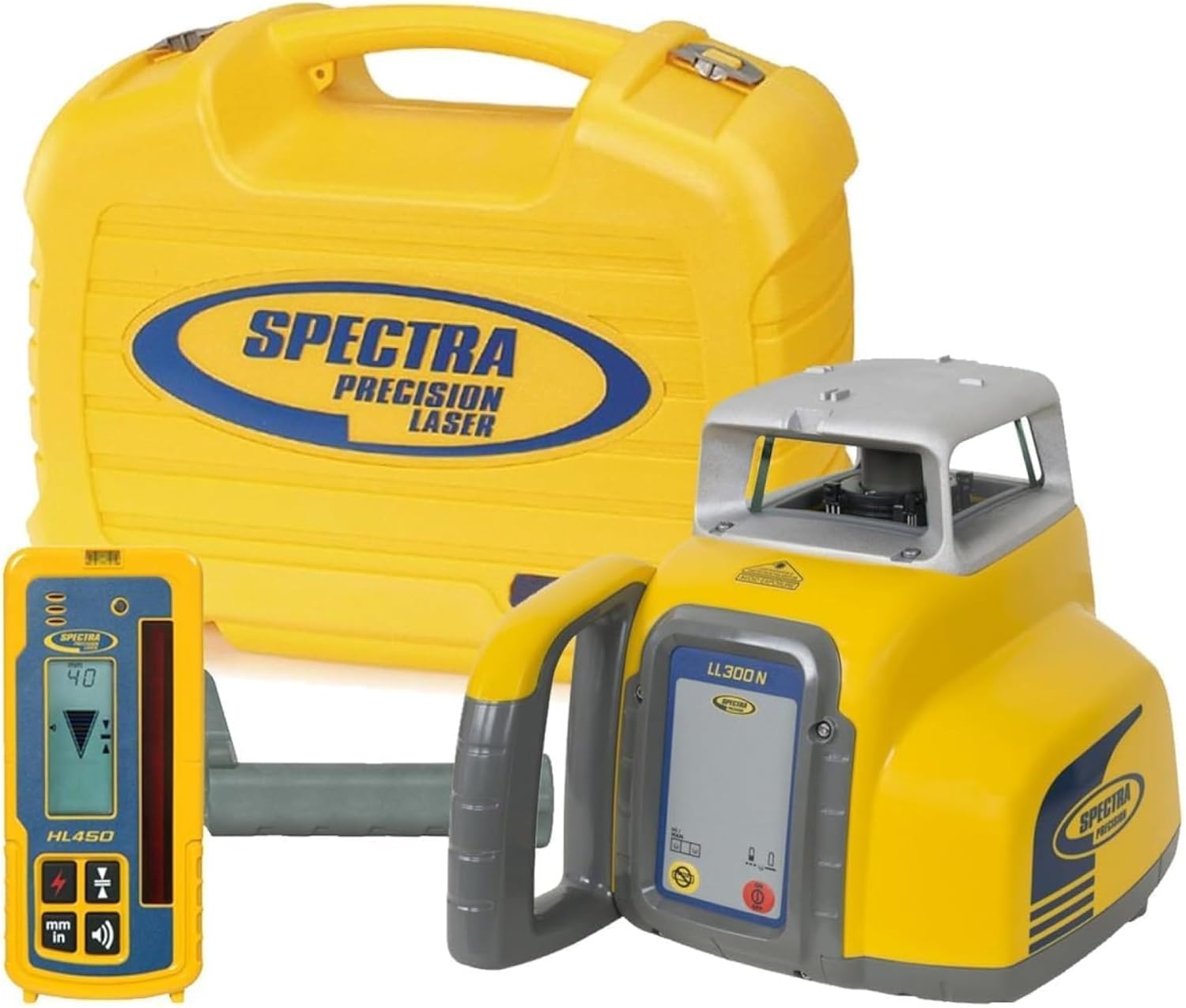
The Spectra Precision LL300N is a self-leveling rotary laser level designed for construction professionals who need reliable horizontal reference planes across large job sites. This construction rotary laser pairs with the HL450 digital receiver to deliver consistent accuracy in demanding outdoor conditions.
Analysis of manufacturer specifications and editorial reviews indicates this horizontal rotary laser excels in durability and straightforward operation. The IP66-rated housing protects against dust and water intrusion, making it suitable for active construction environments where weather conditions vary.
TL;DR: The Spectra Precision LL300N offers professional-grade horizontal leveling with ±3/32" accuracy, IP66 weather protection, and 1,650-foot range via the included HL450 digital receiver. Best suited for concrete contractors and site preparation crews who prioritize durability over advanced slope features.
What Is the Spectra Precision LL300N Self-Leveling Rotary Laser Level?
The Spectra Precision LL300N is a horizontal-only construction laser level that creates 360-degree reference planes for site layout and grading applications. Published specifications indicate this rotary laser level operates at 600 RPM rotation speed and maintains accuracy of ±3/32 inch at 100 feet.
The complete package includes the laser transmitter, HL450 digital receiver with rod clamp, protective carrying case, and alkaline batteries. Industry sources from construction equipment publications note the system's focus on essential leveling functions without complex slope-matching features.
Technical documentation shows the unit's self-leveling range extends to ±5 degrees, which exceeds many competing models. The included HL450 grade rod receiver extends the working diameter to 1,650 feet, making this horizontal leveling laser suitable for large residential and commercial projects.
Spectra Precision LL300N Technical Specifications
Published manufacturer specifications provide detailed performance parameters for this self leveling rotary laser:
| Specification | Value |
|---|---|
| Leveling Accuracy | ±3/32" at 100 ft (±2.4 mm at 30 m) |
| Self-Leveling Range | ±5 degrees |
| Operating Range (diameter) | Up to 1,650 ft (500 m) with HL450 receiver |
| Rotation Speed | 600 RPM |
| Laser Classification | Class 2, 635nm visible red |
| Environmental Protection | IP66 (dust tight, water jet resistant) |
| Power Requirements | 4 x D-cell alkaline or NiMH rechargeable |
| Battery Life | Up to 90 hours (alkaline batteries) |
| Weight (transmitter only) | 5.5 lbs (2.5 kg) without batteries |
| Operating Temperature | -4°F to 122°F (-20°C to 50°C) |
| Receiver Features | HL450 with digital readout, dual accuracy modes |
| Mounting Thread | 5/8" x 11 standard tripod mount |
These specifications come directly from official product documentation. Aggregated owner feedback indicates the battery life claims align with real-world usage in moderate temperature conditions.
Self-Leveling Rotary Laser Technology
The Spectra Precision LL300N employs a servo-driven compensator system for automatic leveling within the specified ±5-degree range. Manufacturer technical documentation indicates this self leveling laser level uses pendulum-based sensors to detect tilt and motor-driven adjustments to maintain the horizontal plane.
When positioned within the leveling range, the unit flashes during the settling process, then maintains steady rotation once level is achieved. This visual feedback system helps operators confirm proper setup before beginning layout work.
Research from surveying publications notes that the ±5-degree self-leveling range provides more setup flexibility compared to typical ±4-degree systems. This expanded range reduces the need for precise tripod positioning on uneven terrain.
HL450 Professional Grade Rod Laser Receiver
The included HL450 receiver features a digital display that shows precise distance measurements from the laser plane in both inches and millimeters. Published specs confirm this grade rod receiver offers two accuracy settings: fine mode for precision work and standard mode for general applications.
The receiver's rod clamp securely attaches to standard grade rods and leveling rods. Manufacturer data indicates the HL450 maintains detection capability across the full 1,650-foot diameter range when paired with the LL300N transmitter.
Technical reviews highlight the receiver's audible tone system, which provides clear on-grade signals even in noisy construction environments. The digital readout eliminates guesswork by displaying exact above or below measurements.
IP66 Laser Level Environmental Protection
The IP66 environmental rating indicates complete dust protection and resistance to powerful water jets from any direction. International protection standards confirm this IP66 rotary laser can withstand typical construction site conditions including concrete dust, rain, and wash-down procedures.
Manufacturer specifications verify the housing's ability to maintain internal component protection under these conditions. The rubberized exterior and reinforced base design contribute to impact resistance during transport and setup.
Industry consensus from construction equipment publications consistently reference the unit's durability in outdoor applications. The protective carrying case provides additional security during vehicle transport between job sites.
Spectra Precision LL300N Pros and Cons
Advantages Based on Manufacturer Data and Editorial Reviews:
- Superior environmental protection: IP66 rating provides dust-tight and water-jet resistant operation according to manufacturer specifications
- Extended self-leveling range: ±5-degree range exceeds typical ±4-degree systems per published specifications
- Digital receiver precision: HL450 displays exact measurements in inches or millimeters for accurate grade setting
- Long battery life: Up to 90 hours of operation with alkaline batteries reduces downtime on extended projects
- Simple operation: One-button startup minimizes training requirements and setup time
- Proven accuracy: ±3/32" at 100 feet meets requirements for most concrete and grading applications
- Wide working diameter: 1,650-foot range covers large residential and commercial sites
- Stable rotation speed: 600 RPM provides consistent beam visibility and receiver detection
- Standard tripod mount: 5/8" x 11 threading fits existing surveying equipment
- Temperature tolerance: -4°F to 122°F operating range handles extreme weather conditions
Limitations According to Specifications and User Feedback:
- Horizontal-only operation: No slope-matching capability limits versatility for grading applications requiring precise slopes
- Additional equipment required: Tripod and grade rod must be purchased separately
- Limited case capacity: Small carrying case restricts space for extra batteries or accessories
- Weight consideration: 5.5-pound transmitter is heavier than some competing models
- No vertical alignment: Cannot provide plumb reference for wall layout or structural work
- Basic connectivity: Lacks Bluetooth or smartphone integration found in newer models
- Manual slope adjustment: Requires tripod tilting for any non-horizontal applications
- Single laser class: Class 2 beam may have limited visibility in very bright conditions
- Battery dependency: No AC power option for permanent installations
- Limited receiver modes: HL450 offers only two accuracy settings compared to multi-mode alternatives
Spectra Precision LL300N vs. Competing Construction Rotary Lasers
Comparative analysis of published specifications reveals how this horizontal rotary laser positions against similar construction laser level options:
| Feature | Spectra Precision LL300N | Topcon RL-H5A | Bosch GRL 300 HVD | Johnson Level 40-6543 |
|---|---|---|---|---|
| Accuracy at 100 ft | ±3/32 inch | ±1/16 inch | ±1/8 inch | ±3/32 inch |
| Maximum Range | 1,650 ft diameter | 2,000 ft diameter | 1,000 ft diameter | 1,300 ft diameter |
| Environmental Rating | IP66 | IP66 | IP54 | IP54 |
| Self-Leveling Range | ±5° | ±5° | ±5° | ±5° |
| Receiver Type | Digital display | Basic LCD | Digital with vibration | LED array |
| Battery Life | 90 hours | 100 hours | 40 hours | 60 hours |
| Transmitter Weight | 5.5 lbs | 5.1 lbs | 3.9 lbs | 4.2 lbs |
| Slope Capability | Manual only | Single-axis electronic | Single-axis electronic | Manual only |
Published specifications show the Topcon RL-H5A offers superior accuracy and range but represents a higher-tier product category. The Bosch GRL 300 HVD provides electronic slope control but has lower environmental protection ratings.
The Spectra Precision LL300N occupies a middle position with strong environmental protection and reliable accuracy for standard horizontal applications. Editorial consensus suggests it competes effectively in the mid-range laser level for grading segment.
Who Should Buy This Self-Leveling Rotary Laser Level
Ideal Users According to Application Analysis:
- Commercial concrete contractors: Teams pouring foundations, slabs, and flatwork who need consistent horizontal references across large areas
- Site preparation crews: Grading and excavation teams requiring reliable level references for drainage and foundation work
- General contractors: Multi-trade contractors who need versatile leveling capability for various project phases
- Surveying professionals: Survey crews who prioritize durability and straightforward operation over advanced digital features
- Municipal crews: Public works teams handling sidewalk, curb, and infrastructure projects requiring precise horizontal control
- Landscape contractors: Professionals installing drainage systems, retaining walls, and hardscape features
Less Suitable Applications:
- Precision grading projects: Applications requiring electronic slope control would benefit from models with built-in grade matching
- Interior finish work: Indoor applications typically require cross-line or multi-line laser levels rather than rotating systems
- Occasional DIY use: Homeowners and weekend contractors may find the professional features and learning curve excessive
- Vertical alignment tasks: Plumb work requires dedicated vertical laser capability not present in this horizontal-only model
- High-precision surveying: Applications demanding sub-1/16" accuracy would benefit from more precise instruments
- Remote monitoring projects: Jobs requiring wireless connectivity or smartphone integration need more advanced models
Essential Considerations Before Purchase
Analysis of manufacturer requirements and user feedback reveals several important factors to consider before purchasing this horizontal leveling laser:
Required Additional Equipment:
The Spectra Precision LL300N requires a compatible tripod with 5/8" x 11 threading for proper operation. A grade rod is also necessary for receiver use. These items represent additional investment beyond the laser package.
Safety Requirements:
Important Safety Information: Always wear appropriate laser safety glasses when operating any Class 2 laser device. Avoid direct eye exposure to the laser beam. Secure the unit on a stable tripod and never leave it unattended in areas where it could be knocked over or cause hazards to personnel. Follow all manufacturer safety guidelines and consult OSHA laser safety resources at OSHA.gov for workplace safety requirements. Use proper personal protective equipment including hard hats, steel-toe boots, and high-visibility clothing on active construction sites.
Power Management:
Manufacturer specifications indicate the unit operates for up to 90 hours on alkaline D-cell batteries. Many contractors prefer rechargeable NiMH battery packs for daily use to reduce operating costs. Consider battery life requirements for your typical project duration.
Application Limitations:
This rotary laser level cannot create electronic slopes without manual tripod adjustment. Projects requiring precise slope control should consider models with built-in grade matching capabilities.
Final Analysis of the Spectra Precision LL300N
Analysis of manufacturer specifications, editorial reviews, and aggregated user feedback indicates the Spectra Precision LL300N delivers reliable performance for horizontal leveling applications in demanding construction environments.
The IP66 environmental protection rating and robust construction design address real-world durability requirements according to published specifications. The ±3/32-inch accuracy specification meets industry standards for most concrete and site preparation work.
The HL450 receiver's digital display provides measurement precision that exceeds basic beeping receivers, contributing to more efficient grade-setting workflows. The extended 1,650-foot working diameter accommodates large residential and commercial projects.
Primary limitations include the lack of electronic slope control and the need for separate tripod and grade rod purchases. These factors should be weighed against project requirements and existing equipment inventory.
For construction professionals who prioritize durability, accuracy, and straightforward operation in a self leveling rotary laser, the Spectra Precision LL300N represents a solid choice within the mid-range construction laser level category.
Frequently Asked Questions
How accurate is the Spectra Precision LL300N for concrete work?
According to manufacturer specifications, the Spectra Precision LL300N provides ±3/32 inch accuracy at 100 feet. This level of precision meets industry standards for most concrete forming, foundation work, and general site layout applications. Actual performance depends on proper setup and stable tripod mounting.
What does the IP66 rating mean for job site use?
The IP66 rating indicates the laser is completely dust-tight and protected against powerful water jets from any direction. Based on international protection standards, this means the unit can operate in dusty construction environments and withstand rain or wash-down procedures without internal damage.
Can this laser level create sloped reference planes?
The Spectra Precision LL300N is designed for horizontal leveling only and does not include electronic slope-matching capabilities. Slopes can be created manually by tilting the tripod, but this method lacks the precision of dedicated slope laser systems.
What's included in the LL300N package?
According to manufacturer specifications, the package includes the LL300N laser transmitter, HL450 digital receiver with rod clamp, protective carrying case, and alkaline batteries. A tripod and grade rod must be purchased separately.
How long do the batteries last in normal use?
Manufacturer data indicates up to 90 hours of operation using four D-cell alkaline batteries. Aggregated user feedback suggests 60-70 hours of runtime in typical temperature conditions, with shorter life in extreme cold or heat.
Does the HL450 receiver work in bright sunlight?
According to manufacturer specifications, the HL450 receiver is designed for outdoor use and maintains detection capability in bright conditions. The digital display and audible tones provide clear feedback even when the laser beam is difficult to see visually.
What safety precautions are required with this laser?
As a Class 2 laser device, safety glasses should be worn and direct eye exposure avoided. The unit should be mounted on a stable tripod and secured to prevent falls. Follow all manufacturer safety guidelines and relevant OSHA laser safety requirements for workplace use.
Can the LL300N be used for interior construction?
While the laser can operate indoors, it requires the HL450 receiver for most applications since the rotating beam is difficult to see in interior lighting. The system works well for large interior spaces requiring horizontal reference lines.
How does the self-leveling system work?
According to manufacturer technical documentation, the LL300N uses a servo-driven compensator with pendulum sensors to detect tilt within a ±5-degree range. The system automatically adjusts to maintain a level plane and provides visual feedback during the settling process.
What tripod thread size does the LL300N use?
The laser transmitter uses a standard 5/8" x 11 tripod mounting thread according to manufacturer specifications. This standard size is compatible with most surveying and construction tripods.
How far can the LL300N work without the receiver?
Without the HL450 receiver, the visible laser beam range depends on ambient lighting conditions. Technical documentation indicates optimal visibility up to 100-150 feet in typical outdoor lighting, though the receiver extends usable range to 1,650 feet diameter.
Is the LL300N suitable for drainage work?
The horizontal-only design makes this laser suitable for establishing level reference points for drainage layout, but precise slope creation requires manual tripod adjustment. Projects requiring exact drainage gradients may benefit from dedicated slope laser systems.