Milwaukee M18 FUEL Hammer Drill: Raw Power King?
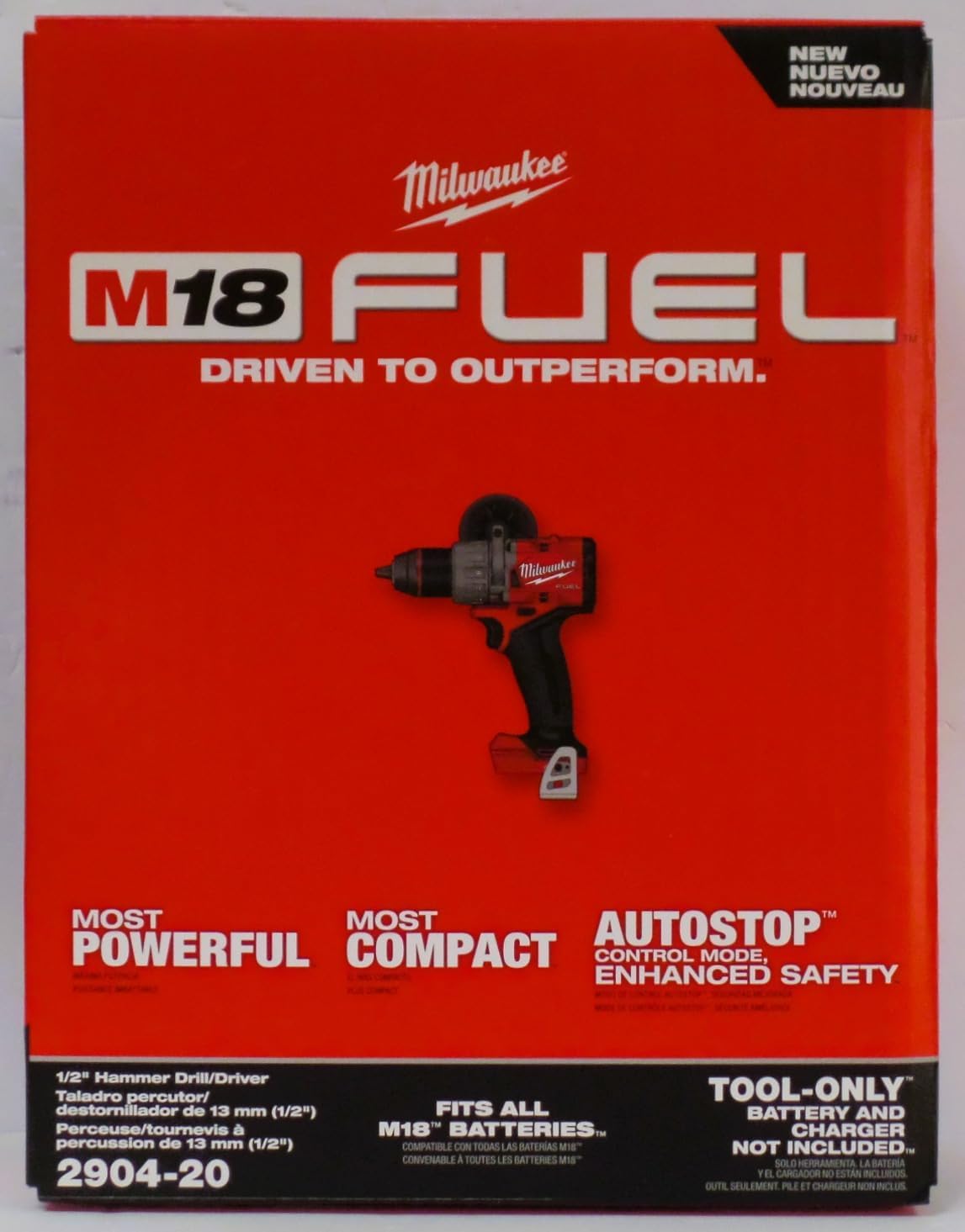
The Milwaukee M18 FUEL hammer drill has held a top spot on contractor wish lists for a reason that's hard to argue with: 1,400 in-lbs of torque. That's the highest number in the 18V/20V cordless hammer drill class, and Milwaukee didn't get there by accident. We pulled apart every publicly available spec, dug through community discussions on trade forums, and ran a detailed comparison against the DeWalt DCD999 and Makita XPH14. Here's what the data actually tells you.

What Is the Milwaukee 2904-20?
The 2904-20 is Milwaukee's flagship M18 FUEL cordless hammer drill/driver. It sits at the top of their 18V cordless lineup and is built around the POWERSTATE brushless motor — Milwaukee's proprietary motor platform designed specifically for sustained high-torque output. Like most premium hammer drills, it operates in three modes: drill, hammer drill, and driver.
What separates the 2904-20 from the rest of the M18 line is the combination of that 1,400 in-lbs torque rating, the REDLINK PLUS electronic intelligence system, and an 18-position clutch. The torque number is the headline — it's the highest in the 18V/20V cordless class by a meaningful margin. The REDLINK system is less flashy but arguably just as important: it's an overload protection circuit that monitors heat, current draw, and motor load in real time to prevent damage.
Milwaukee's M18 ecosystem includes over 275 tools sharing the same battery platform. If you're already running Milwaukee batteries, the 2904-20 drops right in. If you're platform-shopping, the ecosystem is second only to DeWalt's 300+ tool lineup in breadth — and Milwaukee's lithium-ion battery technology (particularly their HIGH OUTPUT packs) is regarded as among the best in the industry.
Milwaukee M18 FUEL Hammer Drill Key Specs
| Spec | Milwaukee 2904-20 |
|---|---|
| Power Source | M18 18V Lithium-Ion |
| Motor Type | POWERSTATE Brushless |
| No Load Speed | 0-550 / 0-2,000 RPM (2-speed) |
| Max Torque | 1,400 in-lbs |
| Blows Per Minute | 0-32,000 BPM (hammer mode) |
| Chuck Size | 1/2 inch, all-metal ratcheting |
| Clutch Settings | 18 positions |
| Electronics | REDLINK PLUS intelligence |
| Weight (bare tool) | 4.2 lbs |
| Weight (with 5.0Ah battery) | ~6.0 lbs |
| Length | 7.75 inches (front to back) |
| Battery | M18 (sold separately in bare tool version) |
| LED Work Light | Yes |
| Belt Hook | Included |
| Warranty | 5-year limited |
The numbers that define this drill: 1,400 in-lbs of torque (category-leading), 18-position clutch (second only to Makita's 21), and that 5-year warranty — the longest in the premium hammer drill class. The tradeoff shows up in the weight column: 4.2 lbs bare makes it the heaviest of the big three.
Why the Milwaukee M18 FUEL Hammer Drill Is Everywhere Right Now
Milwaukee has built a reputation over the past decade as the brand that contractors reach for when raw performance matters most. The M18 FUEL lineup in particular has become a job-site standard across electrical, plumbing, and general construction trades. The 2904-20 is the latest iteration of that flagship hammer drill, and it continues Milwaukee's strategy of leading on power output.
The competitive dynamics are straightforward: Milwaukee leads on torque (1,400 in-lbs), DeWalt leads on versatility (3-speed transmission, FLEXVOLT scaling), and Makita leads on clutch precision (21 positions). Each brand has staked out a clear territory, and contractors tend to align with whichever priority matches their daily work. Milwaukee's territory is brute force and durability — and they've earned that positioning through years of consistent performance in the trades.
The 5-year warranty is a significant factor in the buying decision at this tier. DeWalt offers 3 years, Makita offers 3 years. Milwaukee's extra two years of coverage signals confidence in the build quality and gives professional users — who put hundreds of hours on a single drill — meaningful peace of mind. That warranty advantage comes up repeatedly in tool forum discussions as a deciding factor.
The M18 platform's growth has also accelerated adoption. With 275+ tools sharing the same batteries, tradespeople who start with a Milwaukee drill tend to build out an entire Milwaukee kit. Battery investment creates ecosystem lock-in, and Milwaukee has leveraged that effectively.
POWERSTATE Brushless Motor
Milwaukee doesn't use off-the-shelf brushless motors — POWERSTATE is their in-house motor platform, engineered specifically for their M18 tools. The practical difference: the motor, battery electronics, and tool firmware are designed as an integrated system rather than assembled from separate component suppliers. Per Milwaukee's published specifications, this integration allows the motor to sustain higher output under load compared to generic brushless designs.
The claimed benefits track with what brushless motors deliver across the industry — no carbon brush wear, reduced friction and heat, improved energy efficiency, and longer motor life. What Milwaukee adds on top is the calibration between the POWERSTATE motor and the REDLINK PLUS control electronics. The system adjusts motor output dynamically based on load conditions, which means the drill maintains consistent RPM and torque as resistance increases — rather than bogging down the way brushed motors (and some less sophisticated brushless designs) do.
From a maintenance perspective, the brushless architecture eliminates carbon brush inspection and replacement entirely. For professionals running a drill 6-8 hours a day, that's not trivial — brushed motors on heavy-use tools typically need brush replacement every 6-12 months. The POWERSTATE motor has no wear parts in the motor assembly itself.
Torque & Performance Under Load
Let's address the headline number directly: 1,400 in-lbs of torque. That's the highest in the 18V/20V cordless hammer drill class. The DeWalt DCD999 reaches 1,024 in-lbs (with FLEXVOLT batteries — 750 without), and the Makita XPH14 maxes out at 850 in-lbs. Milwaukee's torque advantage is 33% over DeWalt's FLEXVOLT max and 65% over Makita.
But raw torque numbers need context. Higher torque is most meaningful for specific tasks: driving large-diameter lag screws, boring with hole saws, running auger bits through stacked lumber, and powering through knots in hardwood. For standard pilot holes and general fastener work, the difference between 1,024 and 1,400 in-lbs is largely academic — you'll never engage the full torque capacity on a #8 wood screw.
Where the extra torque becomes a practical advantage is sustained heavy-load work. Community feedback consistently reports that the 2904-20 maintains speed and doesn't bog down when pushing large bits through tough materials — a scenario where lower-torque drills slow noticeably. If your daily work involves running 1" self-feed bits through floor joists or driving 3/8" lags into engineered lumber, the extra headroom matters.
The 2-speed transmission (0-550 / 0-2,000 RPM) is standard for the category but notably lacks the 3-speed option that DeWalt offers. Speed 1 delivers maximum torque at low RPM for heavy driving; Speed 2 provides higher RPM for drilling. The missing middle gear means you don't have a dedicated intermediate setting — you're either at the low end or the high end. For users who frequently switch between varied tasks, that gap is noticeable. For users who primarily do heavy-torque work, the 2-speed setup is perfectly adequate.
REDLINK PLUS Intelligence
REDLINK PLUS is Milwaukee's proprietary electronic protection and optimization system. It monitors the tool-battery system across three vectors: temperature, current draw, and motor load. When any parameter approaches dangerous levels, REDLINK intervenes — reducing output, flashing a warning LED, or shutting down the tool to prevent damage.
Why this matters in practice: cordless drills die from heat and overcurrent more than any other cause. A drill bit that binds in concrete, a hole saw that catches in a stud, a lag bolt that hits a hidden nail — these events cause massive current spikes that can burn out motors and fry electronics. REDLINK PLUS detects these conditions and responds in milliseconds, before damage occurs.
The system also optimizes performance during normal use. By monitoring battery state and temperature continuously, REDLINK adjusts current delivery to maintain consistent output as the battery depletes — so the drill doesn't gradually lose power throughout a charge cycle the way simpler controllers allow. The result is that the last 20% of battery capacity delivers closer to the same performance as the first 20%.
DeWalt and Makita both have their own protection circuits, but Milwaukee's REDLINK system is the most extensively documented and receives the most specific praise in community discussions for its overload behavior — particularly the speed at which it catches binding events.
M18 Battery Platform & Runtime
Milwaukee's M18 platform splits into three tiers that directly affect what you get from the 2904-20:
Compact packs (2.0Ah CP): Milwaukee's compact packs prioritize weight reduction. Fine for light drilling and fastener work. Community reports suggest 20-25 minutes of sustained hammer drilling before depletion — slightly better than DeWalt's compact packs on the same workload, likely due to REDLINK's power management.
Standard XC packs (5.0Ah): The workhorse tier and what most kit configurations include. Provides solid runtime for mixed-material days. Multiple forum discussions report 50-70 minutes of intermittent hammer drilling — competitive with the category.
HIGH OUTPUT packs (6.0Ah HO, 8.0Ah HO, 12.0Ah HO): This is where Milwaukee's battery technology stands out. HIGH OUTPUT packs deliver more sustained current than standard XC packs, which translates to better performance under heavy load — not just longer runtime, but actual power delivery improvement. The 8.0Ah and 12.0Ah HO packs are physically larger and heavier, but for demanding applications they represent a significant upgrade. Community feedback consistently notes a tangible performance difference with HO packs versus standard XC on the 2904-20.
Unlike DeWalt's FLEXVOLT system (which changes the maximum torque rating based on battery type), Milwaukee's approach with HIGH OUTPUT is about sustaining peak performance longer under continuous heavy load — the torque rating stays at 1,400 in-lbs regardless of which M18 battery you use. The difference is how long the drill can maintain that output before thermal management kicks in.
All M18 batteries include individual cell monitoring, overcharge protection, thermal shutoff, and discharge protection. Milwaukee's chargers range from the standard M18 charger (~60 minutes for 5.0Ah) to the rapid charger and the super charger that cuts times significantly. The standard advice applies: keep two packs in rotation for uninterrupted work.
What the Research Tells Us About the Milwaukee M18 FUEL Hammer Drill
Full transparency: we have not personally tested the Milwaukee 2904-20. Our analysis is based on Milwaukee's published specifications, publicly available technical documentation, and the broad consensus from community discussions across multiple trade forums and tool review platforms. Here's what the data tells us.
The 1,400 in-lbs torque figure is the clear competitive advantage — no other 18V/20V cordless hammer drill matches it. But torque-to-weight ratio tells a more nuanced story. At 1,400 in-lbs / 4.2 lbs, the 2904-20 delivers 333 in-lbs per pound. The DeWalt DCD999 with FLEXVOLT hits 275 in-lbs per pound (1,024 / 3.72), and the Makita XPH14 reaches 213 in-lbs per pound (850 / 4.0). Milwaukee leads here too, but the margin narrows when you factor in the half-pound weight penalty vs. DeWalt.
The 32,000 BPM hammer function sits just below the DCD999's 34,000 BPM — a minor difference that's unlikely to be perceptible in real masonry work. Both drills handle light-to-moderate concrete anchoring competently. Neither replaces a dedicated SDS-plus rotary hammer for structural concrete jobs.
Community sentiment is strongly positive, with two consistent themes: praise for the torque and build durability, and criticism of the weight. The 4.2-lb bare tool weight comes up repeatedly in discussions about overhead work — electricians in particular note that the extra half-pound versus DeWalt becomes noticeable on high-ceiling jobs. The counter-argument from Milwaukee users: the torque advantage means you finish tasks faster, reducing total time at awkward angles.
The 5-year warranty generates consistently positive commentary. Multiple users report successful warranty claims for motor or chuck issues, and the general consensus is that Milwaukee's warranty service is responsive. The extra two years versus DeWalt and Makita is a real differentiator for tools used in professional settings.
Real-World Applications
Understanding specs is step one — knowing which jobs actually benefit from those specs is where the practical value lives. Based on the 2904-20's specifications and how the tool community reports using it:
Electrical rough-in: Running self-feed bits through floor joists, boring through studs for wire pulls, mounting boxes and panels. This is arguably where the 2904-20 shines brightest — the 1,400 in-lbs means self-feed bits don't stall in dense lumber, and the REDLINK protection catches binding events before they snap bits or wrench your wrist.
Structural framing: Driving structural lag screws, through-bolts, and timber fasteners. Speed 1 delivers the full torque at controlled RPM. The 18-position clutch provides finer control than DeWalt's 11 positions for dialing in consistent fastener depth across long runs of framing.
Plumbing and HVAC: Boring through joists for pipe runs, driving hangers and brackets, anchor work in concrete pads. The hammer mode at 32,000 BPM handles concrete anchors up to about 1/2-inch. For larger penetrations, reach for a dedicated rotary hammer.
Renovation and remodeling: Mixed-material projects where you're hitting wood, metal, occasional masonry, and driving various fasteners throughout the day. The 2-speed transmission covers most scenarios, though users who frequently switch between fine driving and rapid drilling may miss the 3-speed option offered by DeWalt.
Deck and outdoor construction: Treated lumber work where torque matters for large fasteners and pre-drilling prevents splits. The 18-position clutch is a real asset here — treated lumber is softer than hardwood and it's easy to over-drive fasteners without precise clutch control.
Heavy-duty concrete anchoring: Tapcon screws, wedge anchors, and masonry sleeve anchors up to 1/2-inch. The 2904-20 handles this at the edge of its design intent — it's a drill with hammer capability, not a dedicated concrete tool. For holes over 1/2-inch or all-day masonry, an SDS-plus hammer is the right pick.
Usage Tips & Best Practices
⚠️ Safety first — 1,400 in-lbs of torque demands respect. Always wear ANSI-rated safety glasses. Hearing protection (NRR 22+) is essential during hammer mode and extended high-torque drilling — the 2904-20 is louder under load than lighter drills. For concrete and masonry work, a properly fitted N95 or half-face respirator is mandatory — respirable silica dust causes irreversible lung damage. Impact-rated gloves help with vibration and protect against unexpected torque reactions.
- Respect the torque on Speed 1: At 1,400 in-lbs, the 2904-20 can wrench unsecured workpieces violently or snap undersized bits instantly. Clamp everything. Use both hands. The side handle isn't optional for heavy drilling — it's a safety requirement.
- Use the 18-position clutch: More clutch settings means finer control over fastener depth. Start at the lowest setting that completes the drive and work up. This drill has enough torque to snap screw heads clean off if the clutch is set too high or bypassed.
- Hammer mode for masonry only: Never engage hammer mode on wood, metal, or plastic. The percussive mechanism damages the workpiece and puts unnecessary stress on the drill's internals.
- Let the drill do the cutting: Moderate, steady pressure. Leaning hard on the drill doesn't speed up drilling — it overheats bits, accelerates wear, and can trigger REDLINK's overload protection. The motor is designed to sustain its rated output under appropriate load.
- Match bit quality to the tool: The 2904-20 exposes weak bits immediately. Cheap bits flex, dull, and break faster under the torque and RPM this drill produces. Invest in quality HSS or cobalt bits for metal, carbide-tipped for masonry, and impact-rated driver bits for fasteners.
- Monitor battery temperature: Extended heavy-load sessions generate heat in both the motor and battery. REDLINK monitors this, but if you notice the drill cycling down output, let the battery cool for a few minutes. Swapping to your second charged pack keeps work moving.
- Pre-drill in hardwood always: The 2904-20 has the torque to force fasteners into oak or maple without pilot holes. Don't do it. The grain will split and the joint will be compromised. A quick pilot hole takes seconds and produces a stronger result every time.
Maintenance & Longevity
The POWERSTATE brushless motor eliminates carbon brush maintenance entirely — there are no wear components in the motor assembly. Milwaukee's 5-year warranty backs the overall build. Keeping the 2904-20 running at peak for years comes down to a few straightforward practices:
- Chuck cleaning: The all-metal ratcheting chuck traps concrete dust, metal shavings, and wood chips in the jaws. Open it fully after messy work and hit it with compressed air. A drop of machine oil on the moving parts every couple of months keeps the ratcheting mechanism smooth. Dirty chuck jaws are the number-one cause of bit slippage on any drill.
- Motor vents: The cooling vents on the housing are the drill's heat management system. Blocked vents cause the motor to run hot, which triggers REDLINK protection sooner and reduces effective runtime. A quick compressed-air blast after dusty jobs takes five seconds.
- Battery contacts: Wipe the rail contacts on both the drill and batteries with a dry cloth periodically. Dirty contacts increase resistance, reduce power delivery, and can cause the drill to behave erratically.
- Storage: Remove the battery before storing. Keep the tool between 40°F and 100°F — extreme temperatures degrade lithium-ion chemistry and can affect electronic components. A dedicated tool storage system or Milwaukee's PACKOUT system protects the investment.
- Side handle and mode selector check: Before each use, confirm the side handle is tight, the speed selector clicks cleanly, and the mode selector engages properly in each position. Thirty seconds of inspection prevents problems under load.
Must-Have Accessories
The 2904-20's torque output makes accessory quality even more critical than on lower-powered drills — cheap components fail faster when more force flows through them:
- Quality bit set: HSS twist bits (1/16" to 1/2") for general wood and metal. Cobalt bits for stainless steel and hardened metals. Carbide-tipped hammer drill bits rated for percussion use for masonry — the 32,000 BPM will destroy standard masonry bits quickly.
- Impact-rated driver bits: Non-negotiable. Standard driver bits snap at 1,400 in-lbs. Impact-rated or torsion-zone bits absorb the shock. Stock Phillips #2, Robertson #2, T25 Torx, and T30 Torx for construction fastener coverage.
- Self-feed bits: If you're doing electrical or plumbing rough-in, quality self-feed bits from 1" to 2-9/16" let the 2904-20 do what it does best. Speed 1, firm two-handed grip, let the bit pull itself through.
- Hole saws: Bi-metal hole saws from 3/4" to 2-1/8" for stud penetrations. Speed 1 only. The torque on this drill means hole saws can bind aggressively if you let RPM get too high — REDLINK will catch it, but prevention is better.
- HIGH OUTPUT batteries: If your work regularly involves sustained heavy-load drilling, a single HIGH OUTPUT 6.0Ah or 8.0Ah pack makes a noticeable difference in sustained performance versus standard XC packs. Two batteries minimum for any serious project.
Who Should Buy the Milwaukee M18 FUEL Hammer Drill?
Good fit if:
- You're invested in the Milwaukee M18 ecosystem and want the most powerful hammer drill in the platform
- Your daily work involves high-torque tasks — large fasteners, self-feed bits, auger bits, hole saws through dense material
- The 5-year warranty matters to you — if you put professional hours on your tools, those extra two years of coverage represent real value
- You value absolute torque over transmission versatility — the 2904-20 leads the category on raw output
- You work in electrical, plumbing, or framing trades where sustained high-torque performance is a daily requirement
- You want the 18-position clutch for precise fastener control across varied materials and screw sizes
Maybe look elsewhere if:
- Weight is a critical factor for your work — at 4.2 lbs bare, the 2904-20 is the heaviest of the big three. For overhead-heavy work like ceiling electrical, the DeWalt DCD999 at 3.72 lbs makes a better case
- You want a 3-speed transmission for more granular speed control across varied tasks — only DeWalt offers that right now
- You're on a tight budget and need basic drilling capability — there are solid budget-friendly cordless drills for standard home tasks
- You're invested in DeWalt 20V MAX or Makita LXT batteries — switching battery platforms is expensive, and both competitors offer strong hammer drills in their ecosystems
- Your work is purely light-duty (hanging frames, furniture assembly) — the 2904-20 is significantly overbuilt for those tasks
Milwaukee 2904 vs. The Competition
The premium cordless hammer drill category comes down to three drills. Here's the spec-for-spec comparison:
| Feature | Milwaukee 2904-20 | DeWalt DCD999 | Makita XPH14Z |
|---|---|---|---|
| Motor | POWERSTATE Brushless | Brushless | Brushless |
| Max Torque | 1,400 in-lbs ✅ | 1,024 in-lbs (FLEXVOLT) | 850 in-lbs |
| Speed Settings | 2-speed | 3-speed ✅ | 2-speed |
| Max RPM | 2,000 | 2,000 | 2,100 |
| Max BPM | 32,000 | 34,000 | 31,500 |
| Weight (bare tool) | 4.2 lbs | 3.72 lbs ✅ | 4.0 lbs |
| Chuck | All-metal ratcheting | All-metal ratcheting | All-metal |
| Clutch Settings | 18 | 11 | 21 ✅ |
| Power Scaling | ❌ | ✅ FLEXVOLT ADVANTAGE | ❌ |
| Electronic Protection | ✅ REDLINK PLUS | Standard | Star Protection |
| Onboard Bit Storage | ❌ | ✅ Magnetic | ❌ |
| Ecosystem Size | 275+ tools | 300+ tools | 250+ tools |
| Warranty | 5 years ✅ | 3 years + 90-day MBG | 3 years |
vs. DeWalt DCD999: Milwaukee wins on raw torque (1,400 vs. 1,024), clutch positions (18 vs. 11), electronic protection depth, and warranty (5 vs. 3 years). DeWalt counters with the 3-speed transmission, half a pound less weight, FLEXVOLT power scaling, onboard bit storage, and 2,000 more BPM in hammer mode. The choice comes down to priorities: maximum power and warranty with Milwaukee, or maximum versatility and weight savings with DeWalt.
vs. Makita XPH14Z: Milwaukee leads significantly on torque (1,400 vs. 850), offers better electronic protection, has a larger ecosystem, and provides a longer warranty. Makita's advantages are the most clutch positions (21), dual LEDs, slightly higher max RPM (2,100), and lighter weight than Milwaukee. For torque-dependent work, the Milwaukee isn't close — it nearly doubles Makita's output.
Each drill excels in its lane. Milwaukee is the power champion. DeWalt is the versatility champion. Makita is the precision-control champion. Your daily workload determines which advantage matters most.
Final Verdict: 8.9/10
What stands out:
- ✅ 1,400 in-lbs of torque — category-leading by a meaningful margin, not just a paper spec advantage
- ✅ POWERSTATE brushless motor with REDLINK PLUS intelligence provides both peak power and comprehensive overload protection
- ✅ 5-year warranty is the best in the premium hammer drill class — two years longer than both DeWalt and Makita
- ✅ 18-position clutch provides precise fastener control across a wide range of materials and screw sizes
- ✅ HIGH OUTPUT battery compatibility provides sustained performance improvement for demanding applications
- ✅ 275+ tool M18 ecosystem gives your battery investment broad utility across trades
- ✅ REDLINK PLUS overload detection is the most responsive electronic protection in the category per community reports
Where it falls short:
- ❌ At 4.2 lbs bare, it's the heaviest of the big three — the half-pound penalty versus DeWalt adds up during overhead work and long days
- ❌ Only 2-speed transmission vs. DeWalt's 3-speed — the missing middle gear leaves a gap for users who frequently switch between varied tasks
- ❌ No power-scaling feature like DeWalt's FLEXVOLT ADVANTAGE — torque rating is fixed regardless of battery choice
- ❌ Bare tool ships without a battery at a premium price point — kit versions with batteries and charger are available, check current listings
- ❌ No onboard bit storage — a small omission that DeWalt includes and Milwaukee doesn't
The Milwaukee M18 FUEL 2904-20 earns an 8.9/10 based on our analysis of the publicly available specifications, the competitive landscape, and consistent community feedback. It's the most powerful cordless hammer drill you can buy right now, backed by the longest warranty in its class and one of the strongest battery ecosystems available. The weight penalty and 2-speed limitation keep it just below a 9.0 — but if raw torque and long-term durability are your top priorities, the numbers make a compelling case.
We compile and cross-reference manufacturer specs and community sources so you can make an informed decision. Check the listing for current configurations and availability.
FAQ
Does the Milwaukee 2904-20 come with batteries?
The 2904-20 is available as a bare tool (no battery) and in kit configurations that include M18 batteries and a charger. Kit availability and included battery sizes vary — check the current listing for the latest options. If you already own M18 batteries, the bare tool avoids paying for duplicates.
What's the difference between M18 and M18 FUEL?
M18 is Milwaukee's 18V cordless platform. M18 FUEL is the premium tier within that platform, featuring the POWERSTATE brushless motor, REDLINK PLUS electronic intelligence, and REDLITHIUM battery optimization. FUEL tools deliver more power, longer runtime, and better overload protection than standard M18 tools. Both use the same M18 batteries interchangeably.
How does the Milwaukee 2904-20 compare to the DeWalt DCD999?
Milwaukee leads on torque (1,400 vs. 1,024 in-lbs), clutch positions (18 vs. 11), and warranty (5 vs. 3 years). DeWalt leads on weight (3.72 vs. 4.2 lbs), speed settings (3-speed vs. 2-speed), BPM (34,000 vs. 32,000), and offers FLEXVOLT power scaling. Milwaukee prioritizes maximum power; DeWalt prioritizes versatility. Your daily workload determines which matters more.
Can the Milwaukee 2904-20 drill into concrete?
Yes — the hammer mode delivers 32,000 BPM, suitable for light-to-moderate concrete and masonry work with bits up to about 1/2-inch diameter. For all-day concrete work, holes over 1/2 inch, or structural masonry applications, a dedicated SDS-plus rotary hammer is the appropriate tool. The 2904-20 handles the concrete tasks that come up on mixed-material jobs.
What does REDLINK PLUS actually do?
REDLINK PLUS is Milwaukee's electronic protection system that monitors temperature, current draw, and motor load in real time. It prevents damage from overheating, overcurrent events (like a bit binding in material), and excessive discharge. It also optimizes power delivery throughout the battery's charge cycle to maintain consistent performance as battery level drops.
Is the Milwaukee 2904-20 too heavy for overhead work?
At 4.2 lbs bare (approximately 6 lbs with a 5.0Ah battery), it's the heaviest of the big three premium hammer drills. For occasional overhead work it's manageable. For all-day overhead drilling — ceiling electrical, overhead HVAC, etc. — the half-pound weight penalty versus DeWalt becomes noticeable over hours. Users who primarily work overhead may want to compare the DeWalt DCD999 at 3.72 lbs.
Do HIGH OUTPUT batteries make a difference on the 2904-20?
Per Milwaukee's specs and consistent community reports, HIGH OUTPUT packs deliver better sustained performance under heavy load compared to standard XC packs. The torque rating doesn't change (still 1,400 in-lbs with any M18 battery), but the drill can maintain peak output longer before thermal management reduces power. For demanding applications, the difference is noticeable.
What warranty does Milwaukee offer on the 2904-20?
Milwaukee provides a 5-year limited warranty — the longest in the premium cordless hammer drill category. The warranty covers defects in materials and workmanship. It does not cover normal wear, misuse, or unauthorized modifications. Check Milwaukee's official site for complete warranty terms and registration.
Can the 2904-20 be used as a regular drill/driver?
Yes — the 2904-20 operates in three modes: drill (wood and metal), hammer drill (concrete and masonry), and driver (screws and fasteners with 18-position clutch control). The 18-position clutch provides finer fastener-depth control than many dedicated drill/drivers. It's a fully capable drill/driver that also happens to have class-leading hammer capability.
What drill bits should I use with the Milwaukee 2904-20?
Wood: HSS twist bits or brad-point bits for clean holes. Metal: cobalt or titanium-coated HSS with cutting oil for steel. Concrete: carbide-tipped hammer drill bits rated for percussion use — the 32,000 BPM will destroy non-rated bits. Driving: impact-rated bits only. At 1,400 in-lbs, standard driver bits snap immediately. Quality bits are essential to match this drill's output.