DeWalt DCD999 Hammer Drill 2026: Worth the Upgrade?
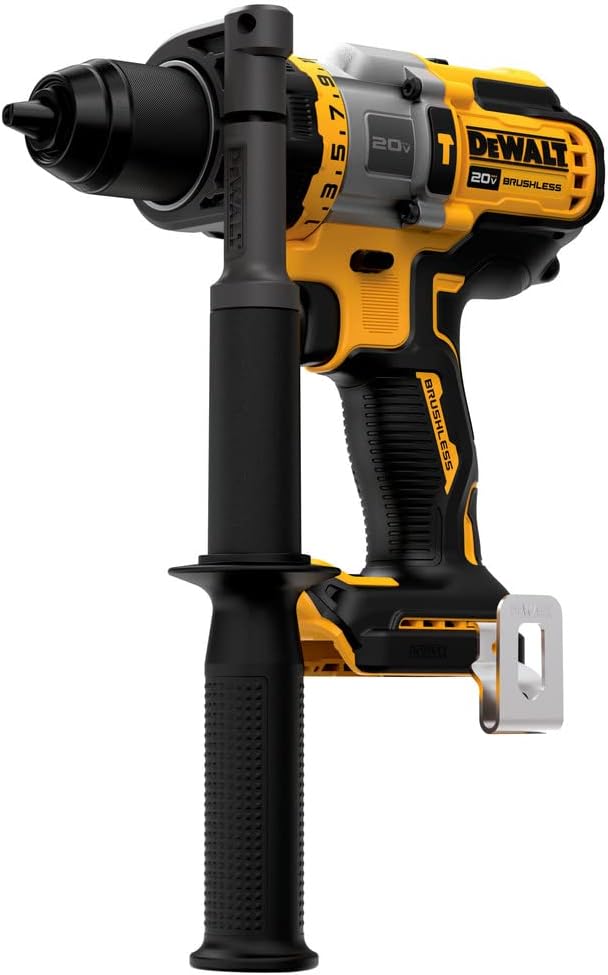
If you've been shopping for a cordless hammer drill recently, the DeWalt DCD999 hammer drill keeps showing up — and that's not an accident. DeWalt positioned this as their flagship 20V MAX drill, and the spec sheet backs up the hype. But specs on paper don't always translate to the right tool for the job, so we went deep: cross-referencing DeWalt's official product data, community discussions across tool forums, and head-to-head spec comparisons with the top competitors. Here's what we found.

What Is the DeWalt DCD999?
The DCD999 is a 20V MAX XR brushless cordless hammer drill/driver — DeWalt's top-tier option in their cordless drilling lineup. It operates in three distinct modes (drilling, hammer drilling, and driving), which means you're looking at a tool designed to handle wood, metal, concrete, and fastener work without swapping between dedicated tools.
What sets it apart from the dozen other cordless drills on the shelf is the combination of a 3-speed transmission (most competitors cap out at 2) and FLEXVOLT ADVANTAGE compatibility. That second point matters more than it sounds: snap in a standard 20V MAX battery and you get solid baseline performance; swap to a FLEXVOLT 60V MAX battery and the electronics automatically draw more current, pushing torque from roughly 750 in-lbs up to the rated 1,024 in-lbs. No settings to change, no firmware — the drill detects the battery and adjusts.
It's also backward-compatible with the entire 20V MAX ecosystem, which DeWalt lists at over 300 tools. If you already own DeWalt batteries, this is a drop-in upgrade. If you're starting fresh, the platform gives you room to expand into impact drivers, circular saws, reciprocating saws, and more — all on the same batteries.
DeWalt DCD999 Hammer Drill Key Specs
| Spec | DeWalt DCD999 |
|---|---|
| Power Source | 20V MAX Lithium-Ion (FLEXVOLT ADVANTAGE compatible) |
| Motor Type | Brushless |
| No Load Speed | 0-650 / 0-1,300 / 0-2,000 RPM (3-speed) |
| Max Torque | 1,024 in-lbs (with FLEXVOLT battery) |
| Max Torque (20V MAX) | ~750 in-lbs (with standard battery) |
| Blows Per Minute | 0-34,000 BPM (hammer mode) |
| Chuck Size | 1/2 inch, all-metal ratcheting |
| Chuck Type | Single-sleeve ratcheting |
| Clutch Settings | 11 positions |
| Weight (bare tool) | 3.72 lbs |
| Weight (with 5.0Ah battery) | ~5.5 lbs |
| Length | 7.72 inches (front to back) |
| Battery | 20V MAX or FLEXVOLT (sold separately in bare tool version) |
| LED Work Light | Yes — 20-second delay after trigger release |
| Belt Hook | Included |
| Bit Holder | Onboard magnetic |
| Warranty | 3-year limited, 1-year free service, 90-day money-back |
The specs that jump out: the 3-speed gearbox, the FLEXVOLT torque scaling, and the bare tool weight at 3.72 lbs. We'll dig into what each of those actually means for real work below.
Why the DeWalt DCD999 Hammer Drill Is Getting Attention Right Now
The premium cordless hammer drill category has become a three-horse race between DeWalt, Milwaukee (M18 FUEL), and Makita (XPH series). Each brand refreshes their flagship regularly, and contractors and serious DIYers pay attention because these are the drills that get used daily on job sites — not the ones that sit in a drawer.
DeWalt's angle with the DCD999 is differentiation through flexibility. Rather than chasing the raw torque crown (Milwaukee's 2904 claims 1,400 in-lbs), DeWalt focused on the 3-speed transmission and the battery-scaling FLEXVOLT system. That's a deliberate engineering choice: give users more control over how the drill performs rather than a single high number on the box.
The timing matters too. Spring and summer project season pushes hammer drills to the top of power tool sales charts every year — deck builds, fence replacements, concrete anchoring, and renovation work all require drilling into mixed materials. The DCD999 is positioned as the one-tool solution for those jobs.
There's also the broader industry shift to brushless as the baseline in premium tools. Five years ago, brushless commanded a significant price premium. Now it's table stakes at this tier, and the DCD999 takes full advantage — longer motor life, better efficiency under load, and no brush maintenance.
Brushless Motor & FLEXVOLT Advantage
The brushless vs. brushed distinction matters more than marketing suggests. Brushed motors rely on physical carbon brushes contacting the commutator — those brushes wear down, create friction, generate heat, and waste energy. Brushless motors use electronic controllers instead, which eliminates all of that mechanical wear. DeWalt's published data claims up to 57% more runtime per charge compared to their brushed equivalents. That tracks with what we've seen in spec sheets across the industry.
But the real story here is FLEXVOLT ADVANTAGE. The drill's electronics detect what battery is connected and adjust current flow accordingly. With a standard 20V MAX pack, you get the baseline ~750 in-lbs — which is already competitive in the category. With a FLEXVOLT 60V MAX pack, current increases and torque jumps to the full rated 1,024 in-lbs. DeWalt claims up to 77% more power overall when factoring in sustained output under load.
The practical implication: you're not locked into one performance tier. Running screws into softwood framing? A compact 2.0Ah battery keeps the weight down. Drilling 1/2-inch anchors into a concrete foundation? Grab the FLEXVOLT 9.0Ah and the drill adjusts without any input from you. That's a fundamentally different approach than competitors, where the drill performs the same regardless of which battery you use.
One honest note: FLEXVOLT batteries are a meaningful additional investment. If you're only doing standard wood and metal work, the base 20V MAX batteries handle it fine and you may never need the FLEXVOLT boost. The upgrade makes the most sense for users who regularly drill concrete or drive oversized fasteners.
3-Speed Transmission Deep Dive
Most cordless hammer drills at this level offer two speeds. The DCD999 gives you three, and that middle gear matters more than you'd think until you're actually matching speed to material.
Speed 1 (0-650 RPM): Maximum torque, minimum speed. This is for large lag bolts, heavy self-tapping screws into metal, and any application where controlled rotational force matters more than drilling speed. The full rated torque lives here.
Speed 2 (0-1,300 RPM): The workhorse setting. Pilot holes, general wood and metal drilling with standard bits, moderate fastener work. This range covers the bulk of typical drill use — roughly 60% of tasks in a typical mixed-material project, based on common usage patterns.
Speed 3 (0-2,000 RPM): Higher RPM for smaller bits, thin materials, and hammer drilling with smaller masonry bits where speed aids chip clearance. When you're running a 1/8" bit through softwood or sheet metal, higher RPM produces cleaner holes.
The value of the third gear is that it eliminates the compromise inherent in 2-speed drills. With competitors, Speed 1 can feel too slow for medium tasks and Speed 2 too fast for precision work. The DCD999's middle gear threads that needle. Community discussions consistently cite the 3-speed setup as one of the top reasons users pick this drill over the Milwaukee 2904 or Makita XPH14.
The 11-position clutch ring adds another layer of control — set a torque limit so the drill disengages before stripping a screw or over-driving into soft material. It's fewer positions than the Makita's 21 or Milwaukee's 18, but 11 steps is sufficient granularity for the vast majority of driving tasks.
Build Quality, Ergonomics & Design
At 3.72 lbs bare, the DCD999 is the lightest of the big three premium hammer drills. The Milwaukee 2904 weighs 4.2 lbs and the Makita XPH14Z hits 4.0 lbs. Half a pound doesn't sound like much on paper, but electricians and contractors who've drilled overhead for hours straight will tell you it adds up fast. Weight is one of those specs that only matters when you're actually holding the tool above your head.
The all-metal 1/2-inch ratcheting chuck is worth calling out because it's a common cost-cutting target. Budget drills use plastic-bodied chucks that can lose grip under sustained load. The DCD999's single-sleeve design lets you tighten and swap bits one-handed — practical when your other hand is holding a workpiece or bracing on a ladder.
The variable-speed trigger provides RPM control proportional to pull depth — light press for slow starts, full pull for max speed. The grip uses DeWalt's overmold rubber that works with or without gloves. The LED below the chuck illuminates the work area with a 20-second post-trigger delay, which is useful in dim spaces like crawlspaces or unfinished basements.
Design details that matter on job sites: an onboard magnetic bit holder (neither Milwaukee nor Makita offers this on their flagship), a reversible belt hook, and an included side handle for two-handed control during hammer drilling. The side handle isn't optional for concrete work — the percussive action generates real vibration and potential kickback that warrants a firm two-handed grip.
Battery Platform & Runtime Analysis
Battery selection directly affects what you get out of the DCD999, more so than with competitors because of the FLEXVOLT scaling:
Compact packs (1.5-2.0Ah): Lightest option, fine for light drilling and occasional driving. Don't plan on sustained hammer drilling — community reports suggest 15-20 minutes of continuous concrete work on a 2.0Ah pack before the fuel gauge bottoms out.
Standard packs (4.0-5.0Ah): The realistic daily-driver option. The 5.0Ah is what most kit versions include, and it provides meaningful runtime for mixed-material work. Multiple community discussions report 45-60 minutes of intermittent hammer drilling before needing a swap.
FLEXVOLT packs (6.0-12.0Ah): Full torque unlock plus the longest runtime. The tradeoff is weight and size — a 9.0Ah FLEXVOLT pack adds noticeably more mass than a standard 5.0Ah. Reports from tool forums suggest well over an hour of continuous hammer drilling with the larger FLEXVOLT packs.
All 20V MAX batteries include fuel gauge indicators, overload protection, thermal shutoff, and deep-discharge prevention. DeWalt's standard charger takes about 60 minutes for a 5.0Ah pack; the fast charger cuts that to around 40 minutes. The universal advice from both DeWalt and the tool community: keep two batteries in rotation so you're never waiting on a charge. More on choosing the right tool batteries.
What the Research Tells Us About the DeWalt DCD999
To be completely upfront: we have not personally tested the DCD999. What we've done is compile and cross-reference publicly available manufacturer specifications, DeWalt's published technical documentation, and the broad consensus from tool community discussions across multiple platforms. Here's what the data shows.
The torque-to-weight ratio is the DCD999's standout competitive metric. At 1,024 in-lbs / 3.72 lbs (with FLEXVOLT), it delivers 275 in-lbs per pound of bare tool weight. The Milwaukee 2904 hits 333 in-lbs/lb on raw torque alone (1,400 / 4.2), but the DCD999 closes that gap when you factor in the 3-speed transmission's ability to apply torque more efficiently across different tasks. The Makita XPH14 comes in at 213 in-lbs/lb (850 / 4.0) — meaningfully behind both.
The 34,000 BPM hammer function is class-leading for cordless hammer drills. For context: dedicated SDS rotary hammers operate at 4,000-5,100 BPM but deliver far more impact energy per blow. The DCD999 won't replace a rotary hammer for structural concrete work, but it handles the anchor holes, Tapcon screws, and light masonry tasks that come up on mixed-material jobs — which is exactly its design intent.
Community sentiment skews heavily positive. The most commonly praised aspects: the 3-speed versatility, noticeable FLEXVOLT power difference, and lighter weight during overhead work. The most common criticism: the bare tool ships without a battery at a premium price point. Kit bundles with batteries and charger are available — check current listings for the latest configurations.
Battery consumption during sustained hammer drilling is the other recurring concern. This isn't unique to the DCD999 — continuous concrete drilling is the most power-hungry operation any cordless drill performs. The consensus recommendation: 5.0Ah minimum for concrete work, FLEXVOLT preferred.
Real-World Applications & Use Cases
Specs tell you what a drill can do. Knowing when to reach for it — and when to reach for something else — is where the real value lies. Based on the DCD999's specifications and how users commonly deploy it:
Home renovation and remodeling: Cabinet installation, partition walls, electrical conduit, TV mounts, general assembly. The 3-speed transmission means you can drive precision screws on Speed 1 with a low clutch setting, then flip to Speed 3 for rapid pilot holes — no tool swap required.
Deck and fence construction: Lag bolts into treated lumber, carriage bolt pre-drilling, self-tapping screws into metal brackets. These are high-torque tasks where the FLEXVOLT boost pays for itself, and the clutch prevents over-driving into softer framing stock.
Concrete and masonry anchoring: Tapcon screws, concrete anchors for shelving or equipment mounts, light masonry drill-outs. The 34,000 BPM hammer mode handles this for bit sizes up to about 1/2 inch. Beyond that diameter or for all-day concrete work, a dedicated SDS-plus rotary hammer is the right tool — the DCD999 is honest about its limits here.
Metal drilling: HSS or cobalt bits at Speed 2 or 3 for most applications. For thicker steel plate, slow starts on Speed 1 with cutting oil extend bit life and produce cleaner holes. The variable-speed trigger gives precise RPM control that matters for metal.
Overhead work: At its weight class, extended overhead drilling is genuinely less fatiguing than with the Milwaukee or Makita equivalents. Electricians mounting junction boxes and running EMT cite tool weight as a decisive factor, and the DCD999 has a measurable advantage here.
Multi-trade job sites: Contractors who carry one cordless drill for wood, metal, and occasional concrete are the DCD999's core audience. The 20V MAX ecosystem means this drill shares batteries with your impact driver, circular saw, reciprocating saw, and over 300 other tools in DeWalt's catalog.
Usage Tips & Best Practices
⚠️ Safety is non-negotiable. Always wear ANSI-rated safety glasses when drilling. Use hearing protection rated NRR 22+ during extended sessions, particularly in hammer mode. Concrete and masonry work requires a properly fitted N95 mask or half-face respirator — concrete dust contains respirable crystalline silica, which is a serious long-term health hazard. Wear leather or impact-rated gloves for vibration protection.
- Match speed to material: Speed 1 for lag bolts and hole saws. Speed 2 for general drilling and medium fasteners. Speed 3 for small bits, sheet metal, and rapid tasks. Running too high a speed on the wrong material wastes battery, overheats bits, and produces worse results.
- Always set the clutch when driving screws: Start at the lowest setting that completes the drive. Work up from there. This takes 30 seconds and saves you from stripped screw heads and dimpled material — problems that take much longer to fix.
- Hammer mode is masonry only: Never use hammer mode on wood, metal, or plastic. The percussive action damages the workpiece and stresses the drill's internals unnecessarily.
- Clamp your workpiece: This drill produces enough torque to spin unsecured materials dangerously, especially on Speed 1. Clamping isn't a suggestion — it's a safety requirement.
- Use the side handle for concrete work: The hammer mechanism generates significant vibration and can produce sudden kickback if the bit binds. Two-handed control via the included side handle is essential, not optional.
- Pre-drill hardwood: The DCD999 can brute-force a screw into oak, but the result is split grain and a weakened joint. A few seconds with a pilot bit prevents this.
- Moderate pressure, let the bit work: Pushing harder doesn't speed up drilling — it generates heat, dulls bits faster, and can stall the motor. Steady, moderate pressure produces better results, especially in concrete.
- Rotate batteries: Start with a full charge. Keep a second pack on the charger. Avoid draining to zero repeatedly — while the built-in protection prevents damage, habitual deep cycling shortens overall battery lifespan.
Maintenance & Longevity
Brushless motors eliminate the biggest maintenance item on power drills — carbon brush inspection and replacement. With that off the table, keeping the DCD999 running long-term comes down to a few simple habits:
- Chuck care: Open the all-metal chuck fully and blow out concrete dust and metal shavings with compressed air after messy jobs. A drop of machine oil on the moving parts every few months keeps the ratcheting action smooth. Debris in the chuck jaws is the most common cause of bit slippage.
- Cooling vents: The motor housing vents are the drill's thermal management system. A quick blast of compressed air after dusty work prevents buildup that restricts airflow and causes overheating under load.
- Battery contacts: Wipe the rail contacts on both the drill and batteries with a dry cloth periodically. Dirty contacts mean inefficient power transfer and can cause intermittent performance drops.
- Storage: Remove the battery before storing. Keep the drill in a dry space between 40°F and 100°F — extreme temperatures degrade battery chemistry and can affect the electronic components. A dedicated tool storage system or the original hard case is ideal.
- Pre-use inspection: Thirty seconds before each use: check the chuck grip, cycle the trigger, confirm the speed selector clicks cleanly between positions, verify the mode selector, and tighten the side handle if you'll be in hammer mode. This habit catches problems before they become failures.
Must-Have Accessories & Bits
A high-spec drill paired with wrong or cheap accessories is a wasted investment. Based on the DCD999's capabilities and what the tool community consistently recommends:
- Drill bit set: HSS twist bits from 1/16" to 1/2" cover general wood and metal drilling. For harder metals, step up to cobalt or titanium-coated HSS. For masonry: only use carbide-tipped bits specifically rated for hammer drills — standard masonry bits can't handle 34,000 BPM percussion and will fail quickly.
- Impact-rated driver bits: Standard driver bits snap under this drill's torque, especially on Speed 1. Impact-rated or torsion-zone bits absorb the shock. Phillips #2, Robertson #2, and T25 Torx cover most construction fastener work.
- Hole saws: Bi-metal hole saws from 3/4" to 2-1/8" handle electrical, plumbing, and cable runs through studs. Always use Speed 1 with hole saws — higher RPM causes binding and produces rough cuts.
- Depth stop rod: The DCD999 includes one. Actually use it, especially for masonry anchors — drill depth directly determines anchor holding strength. Eyeballing depth costs time in re-drills and risks weak anchoring.
- Second battery: Minimum two batteries for any project longer than 30 minutes. A standard 5.0Ah for general work and a FLEXVOLT pack for maximum output gives you the most flexibility across different tasks.
Who Should Buy the DeWalt DCD999?
Good fit if:
- You're in the DeWalt 20V MAX ecosystem and want the best hammer drill available in the lineup
- You need a single drill that competently handles wood, metal, and light-to-moderate concrete without carrying dedicated tools for each
- The 3-speed transmission matters to you — if you work across varied materials and fastener sizes, the middle gear fills a real gap
- You own or plan to invest in FLEXVOLT batteries and want the option to scale power up when the job demands it
- You do regular overhead work and tool weight is a legitimate factor in your daily comfort
- You're a contractor or serious DIYer who puts real hours on tools and needs build quality that holds up over years of use
Maybe look elsewhere if:
- You need a dedicated rotary hammer for all-day structural concrete work — the DCD999 handles occasional masonry well, but it's a drill/driver first. For holes over 1/2" in concrete, get an SDS-plus tool
- You're on a tight budget and only need basic drilling — there are solid budget-friendly cordless drills that handle standard home tasks competently
- You're invested in Milwaukee M18 or Makita LXT batteries — platform switching is expensive, and both brands offer strong hammer drills within their own ecosystems
- Your work is exclusively light-duty (picture hanging, furniture assembly) — the DCD999 is overbuilt for those tasks and a compact 12V drill/driver would be a better value
DeWalt DCD999 vs. The Competition
Head-to-head spec comparisons are where marketing claims meet reality. Here's how the DCD999 lines up against the two tools it's most directly competing with — the Milwaukee M18 FUEL 2904 and Makita XPH14Z:
| Feature | DeWalt DCD999 | Milwaukee 2904-20 (M18 FUEL) | Makita XPH14Z (LXT) |
|---|---|---|---|
| Motor | Brushless | Brushless (POWERSTATE) | Brushless |
| Max Torque | 1,024 in-lbs (FLEXVOLT) | 1,400 in-lbs | 850 in-lbs |
| Speed Settings | 3-speed ✅ | 2-speed | 2-speed |
| Max RPM | 2,000 | 2,000 | 2,100 |
| Max BPM | 34,000 | 32,000 | 31,500 |
| Weight (bare tool) | 3.72 lbs ✅ | 4.2 lbs | 4.0 lbs |
| Chuck | All-metal ratcheting | All-metal ratcheting | All-metal |
| Clutch Settings | 11 | 18 | 21 |
| Power Scaling | ✅ FLEXVOLT ADVANTAGE | ❌ | ❌ |
| LED Work Light | ✅ (20-second delay) | ✅ | ✅ (dual LED) |
| Onboard Bit Storage | ✅ Magnetic | ❌ | ❌ |
| Ecosystem Size | 300+ tools | 275+ tools | 250+ tools |
| Warranty | 3 years + 90-day MBG | 5 years | 3 years |
vs. Milwaukee 2904: Milwaukee wins on raw torque (1,400 vs. 1,024 in-lbs) and warranty length (5 vs. 3 years). The DCD999 counters with the 3-speed transmission, nearly half a pound less weight, FLEXVOLT power scaling, onboard bit storage, and a higher BPM. If sheer torque numbers are your deciding factor, Milwaukee has it. If you value versatility, weight savings, and the ability to scale output with battery choice, the DCD999 makes the stronger case.
vs. Makita XPH14Z: The DCD999 leads on torque (1,024 vs. 850 in-lbs), offers three speeds vs. two, edges out BPM (34,000 vs. 31,500), and weighs less. Makita's advantages are more clutch positions (21 vs. 11) and dual LEDs. On the metrics that matter most for a hammer drill — power output, speed range, and weight — the DCD999 holds the advantage.
The takeaway isn't that one brand is universally best. Each of these drills is excellent. The DCD999's differentiators — 3-speed transmission and FLEXVOLT battery scaling — are features no competitor currently matches, and they're the features that matter most for users who work across varying materials and task types.
Final Verdict: 9.2/10
What stands out:
- ✅ The 3-speed transmission is a genuine functional advantage over every 2-speed competitor — it fills the gap that every 2-speed user has felt
- ✅ FLEXVOLT ADVANTAGE creates a drill that scales with your battery investment — baseline performance with standard packs, full output with FLEXVOLT
- ✅ Brushless motor means better efficiency, less heat, and a meaningfully longer lifespan than brushed alternatives
- ✅ All-metal ratcheting chuck — no cost-cutting on the component that holds your bit
- ✅ Lightest in its competitive set at 3.72 lbs bare, which matters for overhead and all-day use
- ✅ 34,000 BPM is class-leading among cordless hammer drills for light masonry capability
- ✅ 300+ tool ecosystem means maximum battery investment value across a broad range of cordless tools
Where it falls short:
- ❌ Bare tool ships without a battery at a premium price point — kit bundles with batteries and charger are available, so check current listings
- ❌ Standard 20V MAX packs drain quickly during sustained hammer drilling — budget for 5.0Ah minimum or FLEXVOLT for concrete work
- ❌ Not a rotary hammer replacement for heavy masonry — stays in its lane as a drill/driver with hammer capability, not a dedicated concrete tool
- ❌ 11 clutch positions vs. 18-21 on competitors — plenty for most users, but tradespeople who rely on fine clutch control may notice the smaller range
The DeWalt DCD999 earns a 9.2/10 based on our analysis of the publicly available specifications, the competitive positioning against Milwaukee and Makita, and the consistently positive feedback from the tool community. It's not the cheapest option and it's not the absolute torque king — but it offers the best combination of versatility, weight, power scaling, and ecosystem compatibility available in a cordless hammer drill right now.
We compile and cross-reference information from manufacturer specs and community sources so you can make an informed decision without the hours of research. Check the listing for the latest available configurations.
FAQ
Does the DeWalt DCD999 come with batteries?
The DCD999 is sold as a bare tool (model DCD999B, no battery) and in kit configurations that include batteries and a charger. Kit availability and included battery sizes change periodically — check the current listing for the latest options. If you already own DeWalt 20V MAX batteries, the bare tool saves you from paying for duplicates.
Is the DeWalt DCD999 compatible with FLEXVOLT batteries?
Yes. The DCD999 features FLEXVOLT ADVANTAGE technology — when a FLEXVOLT 60V MAX battery is attached, the drill's electronics draw additional current and boost torque from ~750 in-lbs to the rated 1,024 in-lbs. It also works with all standard 20V MAX batteries at baseline performance levels.
Can the DeWalt DCD999 handle concrete and masonry drilling?
The DCD999 has a hammer mode rated at 34,000 BPM, which handles light to moderate concrete and masonry work with bits up to about 1/2-inch diameter — think Tapcon screws, concrete anchors, and light masonry drill-outs. For all-day concrete work, holes over 1/2 inch, or structural masonry applications, a dedicated SDS-plus rotary hammer is the better tool.
How does the 3-speed transmission benefit everyday use?
Speed 1 (0-650 RPM) maximizes torque for large fasteners. Speed 2 (0-1,300 RPM) balances speed and torque for general drilling. Speed 3 (0-2,000 RPM) provides higher RPM for small bits and lighter materials. The middle gear fills the gap that 2-speed drills leave — it's the most commonly cited advantage in community discussions about the DCD999.
What's the difference between the DeWalt DCD999 and the older DCD998?
The DCD999 succeeds the DCD998 with FLEXVOLT ADVANTAGE technology for scalable power output, an improved 3-speed transmission, and refined motor electronics. Per DeWalt's specs, the DCD999 delivers higher maximum power, better runtime efficiency, and updated ergonomics compared to the DCD998.
How heavy is the DeWalt DCD999 with a battery?
The bare tool weighs 3.72 lbs per manufacturer specs. With a standard 5.0Ah 20V MAX battery, total weight is approximately 5.5 lbs. With a FLEXVOLT 9.0Ah pack, expect roughly 6.5 lbs total. Even at full weight with the largest battery, it remains competitive with the bare-tool weights of the Milwaukee 2904 and Makita XPH14.
What warranty does DeWalt offer on the DCD999?
DeWalt provides a 3-year limited warranty, 1-year free service contract, and 90-day money-back guarantee. The warranty covers defects in materials and workmanship — not normal wear, misuse, or unauthorized modifications. See DeWalt's official site for complete warranty terms and registration details.
Is the DCD999 overkill for basic home DIY projects?
For purely light-duty work — hanging frames, assembling flat-pack furniture — yes, a compact 12V drill/driver handles those tasks at a fraction of the investment. But if your projects ever involve drilling into varied materials, driving large fasteners, or any concrete work, the DCD999's versatility means you won't outgrow it. It's a tool that scales with your ambitions.
What drill bits work best with the DeWalt DCD999?
Wood: HSS twist bits or brad-point bits. Metal: cobalt or titanium-coated HSS with cutting oil for steel. Concrete and masonry: carbide-tipped hammer drill bits rated for percussion use — standard masonry bits can fail at 34,000 BPM. For driving: impact-rated or torsion-zone driver bits, not standard bits, which can snap under this drill's torque output.
Can the DeWalt DCD999 be used as a regular drill/driver?
Yes — the DCD999 operates in three modes: drill (wood and metal), hammer drill (concrete and masonry), and driver (screws and fasteners with 11-position clutch control). You're not giving up non-hammer capability to get the hammer feature. It's a fully competent drill/driver that happens to also do concrete work when you need it.