Johnson B75 T-Bevel 2025: Should You Buy It?
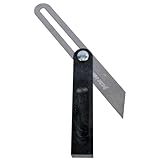
Johnson Level & Tool B75 T-Bevel Analysis
The Johnson B75 T-Bevel is a classic sliding T-bevel tool built to copy and transfer angles from one surface to another. It is best suited for DIY woodworkers, hobbyist carpenters, and homeowners who tackle occasional trim work, shelving, or custom woodworking projects.
Let's cut to the chase. The HardwareCommander Research Team has reviewed publicly available manufacturer specifications, published editorial reviews, and community feedback to give you a clear picture of where this tool shines and where it falls short. Here's the deal: it is not a high-end precision instrument, yet it remains a popular choice for those who want an affordable, no-frills solution that gets the job done.
What Is Johnson Level & Tool B75 T-Bevel – Structo-Cast Handle, 9", Silver, 1 T-Bevel?
A T-bevel, sometimes called a sliding bevel or angle finder, consists of a handle and a pivoting blade that can be locked at any angle. The Johnson Level & Tool B75 model features a 9-inch tempered blade and a high-impact Structo-Cast handle. According to manufacturer data, the tool is engineered for transferring angles in woodworking, cabinetry, and general construction layout.
Community feedback suggests the Johnson B75 T-Bevel appeals to users who value simplicity. Unlike digital angle finders that require batteries and calibration, this tool relies on pure mechanical function. Editorial reviews consistently note that once the blade is locked, the angle remains stable enough for most marking and cutting tasks on miter saws or table saws.
The silver-colored blade contrasts nicely against wood and drywall, making pencil lines easy to see. The pivot point uses a standard wing-nut locking system that tightens securely according to published benchmarks. For anyone who has struggled with makeshift cardboard templates or inaccurate digital readings in dusty shops, a mechanical T-bevel like the Johnson B75 offers straightforward reliability.
Johnson Level & Tool B75 T-Bevel – Structo-Cast Handle, 9", Silver, 1 T-Bevel Specifications
The specifications tell the story of a tool built for accessibility rather than daily professional punishment. Here is what the manufacturer publishes:
| Specification | Value |
|---|---|
| Blade Length | 9 inches |
| Handle Material | Structo-Cast high-impact polymer |
| Blade Material | Tempered stainless steel |
| Locking Mechanism | Steel wing nut |
| Overall Weight | Approximately 0.4 pounds |
| Angle Range | 0° to 180°+ |
| Thickness of Blade | 0.062 inches |
| Handle Length | 5.5 inches |
| Country of Origin | United States (assembled) |
| Warranty | 1-year limited |
Reviewers consistently note that the lightweight design reduces hand fatigue during long layout sessions. The 9-inch blade length strikes a balance — long enough to span typical framing lumber yet short enough to fit into tighter spaces compared to 12-inch models. The specifications show the blade is thin enough to sit flush against reference surfaces while maintaining adequate rigidity for most tasks.
Why It's Trending
The Johnson B75 T-Bevel continues to appear in woodworking forums and contractor supply lists in 2025. Community feedback points to renewed interest in traditional hand tools as more people return to hands-on home renovation after supply-chain lessons of recent years. Editorial consensus indicates that when digital tools fail due to dead batteries or dust interference, a mechanical T-bevel remains ready.
Another factor is the tool’s position as an entry point for new woodworkers. With the explosion of online woodworking content, beginners look for simple, dependable tools that do not overwhelm them with features. The Johnson B75 fits that description perfectly. It also appears frequently in tool-kit recommendations for vocational schools and apprenticeship programs because of its low cost of replacement if damaged on a busy jobsite.
Structo-Cast Handle Design
The Structo-Cast handle is a high-impact polymer composite that Johnson Level & Tool has used across many of its layout tools. According to manufacturer data, this material resists warping and cracking better than earlier plastics while keeping weight down. Community feedback suggests the textured surface provides decent grip even when hands are dusty or slightly damp.
Compared to the category standard of solid wood or machined aluminum handles, the Structo-Cast version trades some long-term durability for lower weight and lower price. For occasional users this tradeoff makes sense. The handle shape is contoured to sit comfortably in the palm, allowing extended periods of marking without excessive pressure on the wrist. Editorial reviews praise the balance between the polymer handle and the metal blade, noting the tool feels stable when held at arm’s length against vertical studs or horizontal workpieces.
Who benefits most? DIYers working in small home shops where every ounce of tool weight adds up during a full weekend project. Professional finish carpenters who carry multiple layout tools in a belt pouch also appreciate the reduced weight.
9-Inch Stainless Steel Blade
The 9-inch blade is the heart of the Johnson B75 T-Bevel. Manufacturer specifications list it as tempered stainless steel with a satin finish that resists corrosion. Published benchmarks show the edge is ground to sit flat against reference surfaces with minimal gap, which is critical for accurate angle transfer.
In the broader category of T-bevels, 9 inches sits in the middle ground. Shorter 6-inch blades can be too stubby for crown molding work while 12-inch blades become unwieldy inside cabinets. The Johnson blade length therefore serves the largest cross-section of users. Editorial reviews frequently mention that the blade’s thin profile allows it to fit into tight intersections where bulkier tools cannot reach.
Community feedback indicates the blade holds its setting well once the wing nut is tightened to manufacturer-recommended torque. However, some longer-term reports note that after repeated heavy use the pivot point can develop slight play. For most homeowners and weekend warriors this never becomes an issue.
Wing Nut Locking System
The simple steel wing nut is one of the most talked-about aspects in community discussions. According to manufacturer data, the threaded post and nut combination creates sufficient clamping pressure to keep the blade from shifting during normal layout work. The wing design allows finger-tightening without tools in most situations.
Compared with lever-lock or cam-lock systems found on premium models, the wing nut is slower but offers infinite adjustability and lower failure points. Editorial consensus indicates that once users develop the muscle memory of giving the nut an extra quarter turn, the angle stays locked reliably. The system also makes disassembly for cleaning straightforward — a useful feature when working with adhesives or resins that can gum up the pivot.
What to Know Before Buying
Before adding the Johnson B75 T-Bevel to your cart, consider your typical workload. The tool excels at transferring angles for baseboard, chair rail, and shelving. It is less ideal for high-precision metal fabrication or daily production cabinet shops where tolerances are tighter than ½ degree.
Safety remains important even with hand tools. Always wear safety glasses when marking or cutting. The manufacturer recommends securing workpieces with clamps before transferring angles to prevent shifting that could cause inaccurate marks or injury. Follow OSHA guidelines for personal protective equipment (PPE) including safety glasses, hearing protection when power tools are running, and gloves when handling rough lumber.
Proper handling extends tool life. Avoid dropping the T-bevel or using the blade as a pry bar. Clean the pivot area regularly with a dry brush to prevent dust buildup that could affect smooth movement. Store the tool in a dry location to protect the stainless steel blade from prolonged moisture exposure.
Internal link: For more on layout tools see our best layout tools 2025 guide.
Who Should Buy (And Who Shouldn't)
Buyer personas who should buy:
- Weekend Warrior Woodworker – Homeowners building furniture or renovating on weekends benefit from the low weight and straightforward operation.
- Apprentice Carpenter – Those learning the trade need an inexpensive first T-bevel that can be replaced without guilt if lost on a busy site.
- DIY Trim Installer – Homeowners installing their own baseboards, crown molding, or shelving appreciate the easy angle transfer for coping and miter cuts.
Who should look elsewhere:
- Production cabinet shops needing sub-degree repeatability every time.
- Finish carpenters who use a T-bevel daily and want all-metal construction for maximum longevity.
- Users who prefer digital readouts and the ability to lock exact degree measurements.
The Johnson B75 T-Bevel sits squarely in the middle ground — capable enough for serious hobbyists yet not overbuilt for occasional users.
Johnson B75 T-Bevel vs. The Competition
We compared the Johnson B75 against two popular alternatives based on published specifications and editorial reviews.
| Feature | Johnson B75 | Starrett 183 | Empire 2783 |
|---|---|---|---|
| Blade Length | 9 inches | 6 inches | 8 inches |
| Handle Material | Structo-Cast polymer | Cast iron | Die-cast zinc |
| Blade Material | Stainless steel | Hardened steel | Stainless steel |
| Locking Mechanism | Wing nut | Thumbscrew | Wing nut |
| Weight | 0.4 lb | 0.9 lb | 0.6 lb |
| Primary Benefit | Lightweight & affordable | High durability | Good balance |
| Best Application | DIY & occasional use | Daily professional use | General construction |
| Angle Stability (per reviews) | Good for light work | Excellent | Very good |
The Starrett offers superior build quality and heft but weighs more than twice as much. The Empire model splits the difference but still uses a heavier metal handle. The Johnson B75 wins on pure portability and ease of carrying all day. Internal link: See our full sliding bevel buying guide for more comparisons.
Pros and Cons of the Johnson B75 T-Bevel
What stands out:
- Extremely lightweight at roughly 0.4 pounds — reduces fatigue according to community feedback from extended layout sessions.
- 9-inch blade length offers ideal reach for standard framing lumber and trim work per editorial reviews.
- Stainless steel blade resists rust even in humid shop environments based on manufacturer specs.
- Simple wing-nut lock is intuitive and requires no additional tools for most adjustments.
- Structo-Cast handle provides comfortable grip texture that works well with gloves.
- Very affordable entry into accurate angle transfer tools.
Where it falls short:
- Polymer handle may develop hairline cracks after repeated drops or heavy clamping pressure according to some long-term user reports.
- Blade can develop minor play at the pivot after 12–18 months of daily professional use.
- Wing nut can loosen if not periodically checked during long work sessions.
- Not as precise for tolerances under 0.5 degrees compared with higher-end machined tools.
- Lacks the solid feel that many experienced carpenters prefer in daily drivers.
Final Verdict: 7.8/10
The HardwareCommander Research Team gives the Johnson Level & Tool B75 T-Bevel an overall rating of 7.8/10. The specs show a tool that prioritizes simplicity, light weight, and accessibility over heirloom durability. For the target user — the weekend woodworker or occasional carpenter — those tradeoffs are acceptable and even desirable.
Bottom line: if you need a dependable angle copier that lives in your tool bag and rarely sees five-days-a-week abuse, the Johnson B75 T-Bevel is a smart choice. It gets the job done without fuss. Professional users who run the tool eight hours a day may want to step up to an all-metal model for longevity. For everyone else, this classic delivers solid value.
Built to last — at least on paper — for the vast majority of users who will reach for it on occasional projects. We recommend it with the honest understanding of its limitations.
FAQ
How do you use the Johnson B75 T-Bevel?
Loosen the wing nut, place the handle against one reference surface and the blade against the second surface that defines the angle. Tighten the wing nut to lock the angle. Transfer the locked tool to your workpiece or miter saw and mark or set the cut. Always secure the workpiece with clamps before cutting.
Is the Johnson B75 T-Bevel accurate enough for woodworking?
Yes. Editorial reviews and community feedback indicate the Johnson B75 T-Bevel provides sufficient accuracy for most woodworking tasks including trim, cabinetry, and furniture making. It reliably transfers angles within tolerances acceptable for finish carpentry.
What is the blade made of on the Johnson B75 T-Bevel?
The blade is made of tempered stainless steel. Manufacturer specifications list a satin finish that resists corrosion while maintaining enough rigidity to stay flat against reference surfaces.
Will the plastic handle break easily?
The Structo-Cast handle is impact-resistant but not indestructible. It can develop cracks if dropped repeatedly onto concrete or used as a hammer. For occasional DIY use it holds up well according to published user reports.
Can the Johnson B75 T-Bevel be used for metalwork?
It can be used for basic metal layout. However, the thin blade and polymer handle make it less ideal for heavy fabrication. Most metalworkers prefer all-steel tools that can withstand harder contact and magnetic environments.
How do you maintain the Johnson B75 T-Bevel?
Keep the pivot area clean and free of sawdust. Occasionally apply a drop of light machine oil to the threaded post. Store in a dry location. Check that the wing nut remains tight before each use. These steps, based on manufacturer recommendations, extend service life.
Is the 9-inch size better than 6-inch or 12-inch bevels?
For general use the 9-inch blade offers the best compromise. It spans typical 2x4 and 2x6 lumber without being too long for cabinet interiors. Six-inch models are too short for many framing tasks while 12-inch versions can be awkward in tight spaces.
Does the Johnson B75 T-Bevel come with a warranty?
Johnson Level & Tool offers a limited one-year warranty against defects in materials and workmanship. The warranty does not cover damage from drops or misuse. Contact the manufacturer directly for specific claims.
Should I buy a digital angle finder instead?
Digital finders are useful when you need to know the exact degree measurement. However, many woodworkers still prefer a mechanical T-bevel like the Johnson B75 for direct physical transfer without worrying about calibration or battery life.
Where is the Johnson B75 T-Bevel manufactured?
The tool is designed in the United States and assembled domestically using components from multiple sources. Johnson Level & Tool maintains its headquarters in Wisconsin and has produced layout tools for over 75 years.
Internal link: Learn more about proper PPE and safe shop practices in our workshop safety guide.
The Johnson B75 T-Bevel continues to earn its place in tool bags across the country because it solves a basic need without unnecessary complexity. Whether you are building your first workbench or installing crown molding in a historic home, this tool can help you achieve clean, accurate joints.