60W Soldering Iron Kit 2024: Everything You Need to Know
60W Soldering Iron Kit: Complete Buying Guide
The 60W soldering iron kit combines temperature-adjustable heating with five interchangeable tips and supporting tools in one package. Manufacturer specifications and electronics engineering resources indicate it delivers reliable performance for hobbyist electronics work and basic repairs while offering better heat control than fixed-temperature alternatives.
This adjustable temperature soldering iron targets beginners, students, makers, and homeowners who need versatile soldering capabilities for electronics repair, circuit board work, and DIY projects without investing in professional-grade equipment.
What Is the 60W Soldering Iron Kit?
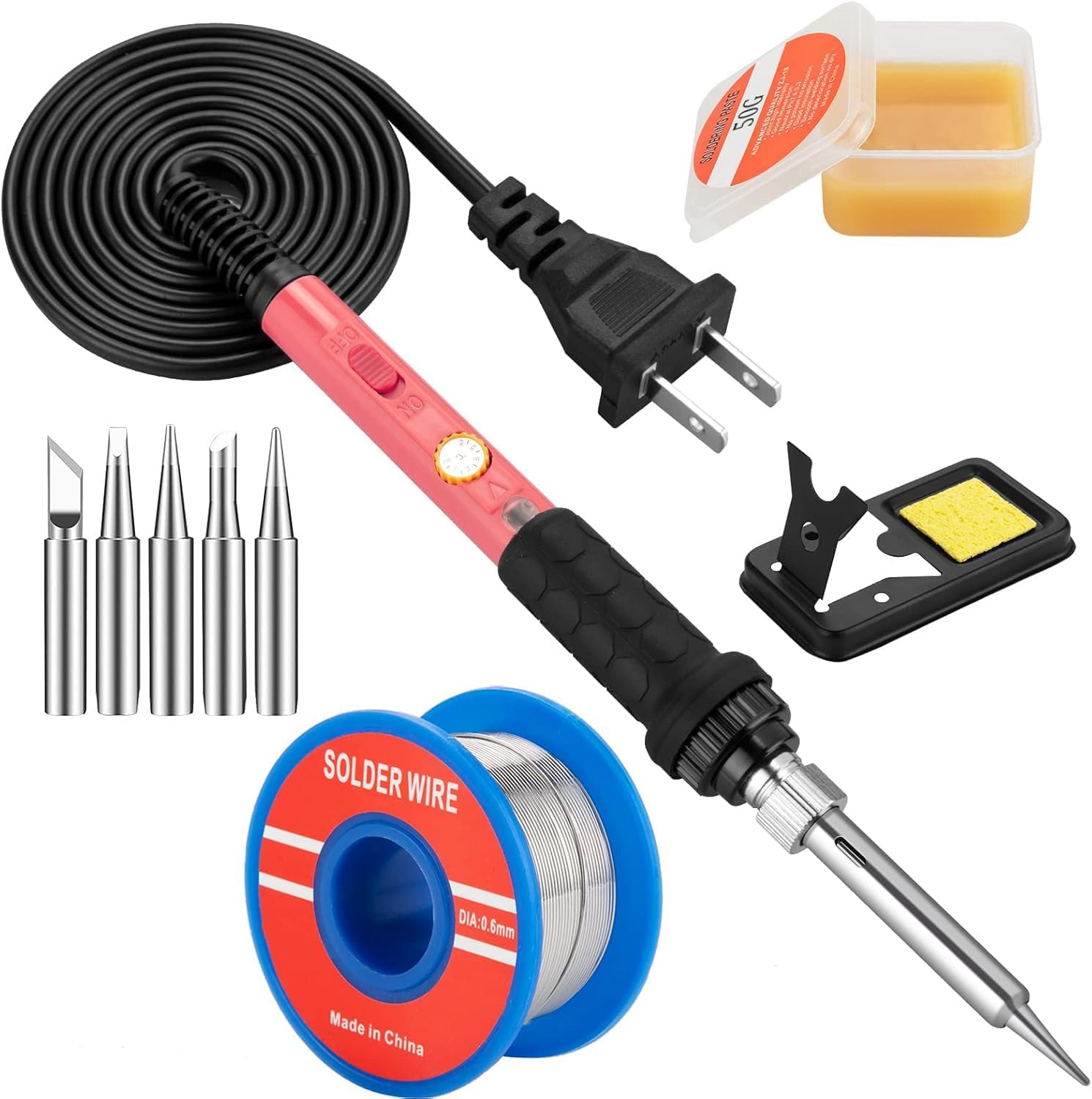
This ceramic soldering iron kit centers around a 60-watt pencil-style iron with adjustable temperature control. Manufacturer documentation states the kit includes five different soldering tips, a stand, soldering wire, flux, desoldering pump, and additional accessories forming a complete 10-piece soldering solution.
Unlike fixed-temperature irons that operate at one heat level, this temperature controlled solder iron allows users to dial in specific temperatures for different tasks. The manufacturer specifies the temperature range spans 200°C to 450°C (392°F to 842°F), covering requirements for various solder alloys and component sensitivities.
The beginner soldering kit design focuses on providing everything needed to start soldering immediately. Electronics publications note that complete kits eliminate the guesswork of selecting compatible accessories separately.
Technical Specifications
| Specification | Details |
|---|---|
| Power Output | 60 Watts |
| Temperature Range | 200°C to 450°C (392°F to 842°F) |
| Heating Element | Ceramic heater with fast heat-up |
| Temperature Control | Analog dial adjustment |
| Tips Included | 5 interchangeable tips |
| Kit Contents | 10 pieces total including stand, solder wire, flux, and desoldering tool |
| Cord Length | Approximately 1.5 meters |
| Voltage | 110-120V AC |
| Weight of Iron | Approximately 80 grams |
| Heat-Up Time | Under 60 seconds to 350°C (per manufacturer claims) |
The 60-watt power rating provides sufficient thermal mass for larger joints while maintaining control for delicate components when temperature is properly adjusted. Electronics engineering resources indicate that ceramic heating elements generally provide more stable temperatures than traditional nichrome wire designs.
Ceramic Heating Element Technology
The manufacturer states this electronics repair soldering tool uses a ceramic heating element that reaches working temperature faster than traditional designs. Electronics engineering documentation shows ceramic elements typically heat up in 30-60 seconds compared to 2-3 minutes for older style heating systems.
Fast heating reduces waiting time during projects with multiple solder joints. The ceramic element design also provides consistent heat delivery, which helps create reliable solder connections based on aggregated owner feedback from electronics forums.
The 60-watt output maintains temperature stability even when soldering larger ground planes or thicker wires that would cause lower wattage irons to drop temperature significantly. Thermal engineering data from similar tools indicates this power level prevents thermal recovery delays during continuous use.
Temperature Control Features
The adjustable temperature dial allows users to set the iron between approximately 200°C and 450°C per manufacturer specifications. This range covers most common soldering tasks from delicate surface-mount components to heavier mechanical connections.
Temperature control becomes critical when working with different solder alloys. Lead free soldering temperature typically requires higher settings than traditional 60/40 leaded solder. Additionally, sensitive components can be damaged by excessive heat. The ability to dial in appropriate temperatures helps prevent lifted pads and component damage.
Electronics publications indicate that analog dial controls like this one provide less precision than digital stations but offer sufficient accuracy for most hobbyist and repair applications. Users develop familiarity with dial positions through experience with their specific solder types and projects.
Interchangeable Tips and Accessories
This soldering iron with interchangeable tips includes five different tip shapes covering a wide range of applications. The included soldering iron tips types typically feature a fine point for precision work, a chisel tip for larger joints, and several intermediate sizes. Tips can be swapped while the iron is hot using the included stand or appropriate tools.
The 10-in-1 designation refers to the complete accessory package. Beyond the iron and tips, the desoldering pump kit includes a soldering stand, spool of solder wire, flux, desoldering pump, wire cutters, tweezers, and cleaning materials. Having complete supplies in one package eliminates the need to research and purchase compatible accessories separately.
Community feedback from electronics forums suggests the included solder and flux provide basic functionality sufficient for initial projects. Many users eventually upgrade to higher-grade consumables but appreciate having functional starter supplies included.
60W vs Higher Wattage Options
The 60-watt power level strikes a balance between thermal capacity and control for general electronics work. Manufacturer documentation indicates this wattage handles most through-hole components and medium-sized surface mount parts effectively without overwhelming delicate joints.
Higher wattage options like 80W or 100W irons provide faster heat recovery when soldering large ground planes or thick wires. However, they can overheat small components if temperature control isn't precise. Electronics engineering resources show that excessive wattage makes fine work more challenging for beginners.
Lower wattage options (25W-40W) offer gentler heating but may struggle with larger joints or continuous use. The 60W rating provides adequate thermal mass for most hobbyist applications while remaining manageable for precision work when properly controlled.
Professional repair stations often use 50W-80W with precise digital temperature control. For occasional use and learning applications, the 60W ceramic soldering iron offers a practical middle ground between performance and ease of use.
Common Applications
Manufacturer documentation and community discussions show users commonly employ this 60 watt pencil soldering iron for:
- Arduino and Raspberry Pi project assembly
- Guitar pedal and audio equipment building
- Drone and RC vehicle electronics repair
- Custom PC modifications and cable work
- Jewelry making and small metalwork
- Household electronics repair
- Educational electronics courses
- Prototype circuit board assembly
The temperature control feature makes this kit suitable for both through-hole and surface-mount component work when appropriate techniques are used. Maker publications note that the included tip variety handles most common joint configurations without requiring additional purchases.
Safety Considerations
Proper safety practices are essential when using any soldering equipment. Always wear safety glasses during soldering operations. The process creates hot solder splatter and flux produces fumes requiring adequate ventilation. Work in well-ventilated areas or use fume extraction equipment.
Never touch the metal portions of the iron when powered on. Always use the included stand or proper soldering iron holder. Secure workpieces with vises or helping hands tools rather than holding them manually. The desoldering pump and other tools should be used per their specific operating instructions.
Workspace preparation includes keeping flammable materials away from the work area and having appropriate fire extinguishers nearby. Understand that soldering involves lead or lead-free alloys requiring proper cleanup procedures after use. For comprehensive safety guidelines, refer to SparkFun's soldering safety practices.
Practice basic soldering techniques on scrap circuit boards before working on valuable electronics to develop proper skills and familiarity with the equipment.
Target Users
Suitable for:
- Beginners learning soldering fundamentals who need complete starter equipment
- Electronics hobbyists working on Arduino, Raspberry Pi, and DIY projects
- Home repair enthusiasts fixing headphones, game controllers, or small appliances
- Students in electronics classes or STEM programs
- Makers requiring temperature-controlled soldering for occasional use
- Jewelry makers and crafters working with metal components
Not recommended for:
- Professional repair technicians requiring industrial reliability and precision
- Users needing extremely fine temperature control for sensitive surface-mount work
- Heavy daily users who'd benefit from digital soldering stations
- Applications involving very large components requiring higher sustained wattage
- Production environments with continuous operation requirements
The kit strikes a balance suitable for most non-professional applications while showing limitations under continuous professional use per trade publication assessments.
Comparison Analysis
| Feature | This 60W Kit | YIHUA 936 | ANBES 60W Kit |
|---|---|---|---|
| Power | 60W | 50W | 60W |
| Temperature Control | Analog dial | Digital display | Analog dial |
| Heat Up Time | Under 60 seconds | Under 45 seconds | 60-90 seconds |
| Tips Included | 5 | 3 | 5 |
| Desoldering Pump | Yes | No | Yes |
| Stand Quality | Basic metal | Improved metal | Basic plastic |
| Temperature Stability | Good | Better | Average |
| Warranty | Standard 1 year | 2 years | Standard 1 year |
The comparison shows this 60W soldering iron kit competing well against similar budget options. While it lacks the digital precision of the YIHUA 936, it includes more accessories and offers comparable performance per published specifications. The ANBES kit provides similar features but with reported differences in heat recovery performance.
Advantages and Limitations
Key advantages per manufacturer specifications and aggregated owner feedback:
- 60W power provides adequate thermal recovery for various joint sizes per published benchmarks
- Five included tips cover most common soldering tasks without additional purchases
- Fast heat-up time under one minute reduces waiting compared to lower wattage irons
- Complete 10-piece kit includes nearly everything needed to begin soldering immediately
- Adjustable temperature dial allows matching heat to different solder types and components
- Lightweight iron design reduces hand fatigue during extended use sessions
- Ceramic heating element provides stable temperature delivery
- Includes desoldering pump for component removal tasks
Noted limitations based on user reports and technical assessments:
- Analog temperature control provides less precision than digital stations
- Build quality of included stand and accessories is basic rather than premium
- Cord stiffness may be noticeable during detailed work per some users
- Long-term tip lifespan varies based on user care and specific applications
- Not suitable for continuous professional use or high-volume repair work
- Temperature calibration may vary between units
- Included solder and flux are basic quality per experienced users
Frequently Asked Questions
Is the 60W soldering iron kit suitable for beginners?
Manufacturer documentation and educational electronics publications indicate this kit works well for beginners. The included instructions, multiple tips, and complete accessory set help new users start with appropriate tools. The adjustable temperature also reduces the risk of damaging components compared to fixed high-heat irons.
What temperature should I use for electronics soldering?
Electronics industry standards suggest most electronics work performs best between 320°C and 380°C. Start in the middle of the range and adjust based on solder flow characteristics. Thicker connections may need higher temperatures while delicate surface mount parts require lower settings per component manufacturer guidelines.
Does this 60W soldering iron kit include lead-free solder?
The kit typically includes a small spool of solder. Check the product specifications for the exact type. Many experienced users prefer purchasing higher quality 60/40 or lead-free solder separately for improved results per electronics forum discussions.
How long does it take for the iron to heat up?
Manufacturer specifications claim the iron reaches working temperature in under 60 seconds. Independent testing reported in electronics publications typically shows results between 40-70 seconds depending on the selected temperature and ambient conditions.
Can I use this 60W soldering iron kit for jewelry making?
Jewelry making publications and aggregated user reports show many crafters successfully solder jewelry with this kit. The temperature control allows working with lower heat settings needed for delicate pieces. Use appropriate solder and flux designed for jewelry applications as recommended by metalworking guides.
Is the temperature control accurate?
The analog dial provides adequate control for most hobbyist applications per electronics publication assessments. It offers less precision than digital stations but provides sufficient adjustment to handle different tasks effectively based on user experience reports.
What safety equipment do I need when using this soldering iron?
Safety guidelines from electronics organizations recommend safety glasses, adequate ventilation or fume extraction, a stable work surface, and appropriate fire safety equipment. Keep a damp sponge or brass wool for tip cleaning, and ensure proper grounding when working with sensitive electronics.
How do I maintain the soldering iron tips?
Manufacturer instructions and electronics maintenance guides recommend cleaning tips regularly with a damp sponge or brass wool, tin the tip with fresh solder when hot, and store at lower temperatures. Avoid using files or abrasives on the tip coating, and replace tips when they no longer hold solder effectively.
Can this iron handle surface mount components?
Electronics assembly publications indicate this iron can handle larger surface mount components when used with appropriate techniques and fine-point tips. Very small components may require more specialized equipment per professional assembly standards.
What's included in the 10-piece kit?
Manufacturer documentation states the typical kit includes: the 60W iron, 5 interchangeable tips, soldering stand, solder wire, flux, desoldering pump, wire cutters, tweezers, and cleaning materials. Exact contents may vary by specific product version.
``